

While many sports medicine physicians gain sideline experience covering professional teams during fellowship, the reality is that most early career practitioners will begin by covering high school or collegiate athletics.
These environments may come with less infrastructure, limited medical support, and variable resources compared to professional-level teams. The season for fall sports such as football, soccer, volleyball, and cross-country is approaching, and preparation is essential for providing safe and effective sideline coverage.
This article serves as a practical guide for sports medicine physicians preparing for coverage at the high school and college levels, emphasizing readiness, communication, and emergency response.
Navigating a Resource-Limited Sideline Environment
The Importance of Preparation
In the college and high school sports environment, being prepared becomes even more crucial, as the team physician will take on more if not all responsibility of medical coverage. One of the most critical tools for preparedness is the Emergency Action Plan (EAP), a structured document that defines response roles, access points for Emergency Medical Services (EMS), emergency equipment locations, and more.1 EAPs should be reviewed with all the medical providers before every sporting event, especially if you are covering a new venue or team. If one is not available, it is your responsibility as the team physician to assist in creating one in collaborating with the various stakeholders, such as certified athletic trainers (ATCs) and those familiar with the venue.
Identify the Team and Their Roles
Effective sideline care hinges on clearly identifying who is part of the medical response team and what roles they play. Understanding exactly who is available and what they are qualified to do is essential for timely and coordinated care.
Start by determining who will assist you during the event. Will ATCs be present? Which personnel are Basic Life Support (BLS) vs Advanced Cardiovascular Life Support (ACLS) certified? Who has access to facilities, emergency equipment, or can unlock gates to allow EMS entry? These details are critical to have in place to provide standard of care during an emergency.
The importance of communication and mutual trust with ATCs and other staff cannot be overstated. A cohesive sideline team, with clearly defined responsibilities, can significantly improve emergency response and overall athlete care.
In sports like football, where protective equipment adds complexity to emergency care, it is important to know who is trained in equipment removal. In the case of a suspected cervical spine injury, the facemask must be removed to allow airway access. Depending on the medical staff and capabilities of nearby hospitals, this will determine if both the helmet and shoulder pad should be removed or remain in place before transport. This decision will be determined during the review of the EAP. If helmet or shoulder pad removal is required, both should be removed to preserve spinal alignment.2 In some situations, such as when high-quality CPR or automated external defibrillator (AED) pad placement is required, full removal may be necessary, but it should be performed by a trained team using a coordinated approach. Proper removal may require up to nine personnel, highlighting the importance of identifying and coordinating with individuals trained in this process before an emergency arises.3
Equipment Considerations
Readiness on the sideline includes not only knowing the EAP but also ensuring that critical emergency equipment is accessible and functional. One of the most vital pieces of equipment is the AED. In cases of sudden cardiac arrest, survival rates decrease by 10% to 12% for every minute without defibrillation when bystander CPR is not provided.4 Prompt AED use within the first three minutes of collapse can lead to survival rates as high as 80%.5 The presence of an onsite AED has been shown to dramatically improve neurologically intact survival, with rates as high as 93% compared to just 9% in facilities without one.6 For this reason, every team physician should begin their sideline preparation by locating the AED and confirming that all personnel know how to access it quickly.
Spinal immobilization equipment, including cervical collars, spine boards and Trainer’s Angel (to cut the helmet face mask) should also be easily accessible as they are lifesaving. Airway management tools such as a bag valve mask, oropharyngeal and nasopharyngeal airways, a CPR pocket mask, and a stethoscope are essential components of a well-stocked sideline kit.7
In addition, physicians should ensure that an epinephrine autoinjector (EpiPen) is available in the event of anaphylaxis, and a 14-gauge needle for potential needle thoracostomy in case of a tension pneumothorax.8-9
Build Your Network
For team physicians, especially those early in their careers, building a strong professional network is a key part of providing comprehensive care. While much of sideline coverage focuses on acute management, what happens after the initial evaluation is just as important. Establishing relationships with local primary care physicians and specialists ensures that athletes have timely access to appropriate follow-up care.
Developing this network takes time and effort, but the earlier you start, the more effective and seamless your care delivery will become. Making these connections during periods of lighter clinical demand or in the off-season can pay dividends once the sports calendar picks up. Consider keeping in contact with physicians you have needed to consult while on call and the different specialties within multidisciplinary groups you have been a part of. A robust network also gives you the ability to consult trusted colleagues when faced with complex or unfamiliar cases—a valuable resource when decisions must be made quickly.
Legal and Liability Considerations
In addition to clinical collaboration, physicians must also be aware of their legal and liability coverage when serving in a sideline capacity. Malpractice insurance policies often vary in how they cover services provided outside the primary hospital or across state lines. In some states, traveling physicians may use their medical license or act in a consulting role alongside a local provider; others may have more restrictive rules regarding out-of-state medical practice.10 Clarifying these details ahead of time can help avoid complications and ensure you are protected while providing care.

Tailor Care to the Everyday Student-Athlete
Unlike professional athletes, high school and collegiate athletes often have limited access to dedicated medical teams, rehabilitation specialists, or sports psychologists. As the team physician, you are frequently the primary medical resource these athletes will interact with. Delivering high-quality care in this setting requires more than clinical expertise; it requires understanding the broader context in which these athletes live and compete.
Consider the Biopsychosocial Model
Student-athletes today face mounting pressures, not just from within themselves but also from coaches, parents, and peers. The added influence of social media and, at the collegiate level, opportunities for Name, Image, and Likeness (NIL) compensation can further heighten expectations and stress.11 Developing trust and open communication with athletes requires understanding how their psychology and social environment influence their success and injury recovery. These relationships enable you to identify issues that may not be immediately visible—such as burnout, anxiety, or struggles with identity during injury.
Another consideration is the increasing intensity and specialization of youth sports. Many athletes now compete year-round, often in a single sport, which contributes to higher rates of overuse injuries.12 Physicians must be aware of sport-specific training loads and recovery guidelines. For example, age-based pitch count recommendations in baseball are critical tools for injury prevention, and team physicians should be familiar with such guidelines.13
Address Disparities in Access to Care
Student-athletes in rural or underserved communities may struggle to access timely follow-up care after injury at athletic events. Pediatric patients with Medicaid face longer delay in scheduling magnetic resonance imaging (MRIs) and are six times less likely to undergo timely anterior cruciate ligament (ACL) reconstruction compared to privately insured peers.14 Furthermore, athletes from lower socioeconomic status schools are also more likely to use emergency rooms for sports-related follow-up.15
As a team physician, you play a key role in navigating these barriers. By building a strong referral network and staying engaged beyond the sideline, you can help ensure that all athletes, regardless of background, receive timely, high-quality care. Supporting the everyday athlete means recognizing that their needs go beyond the musculoskeletal and responding with thoughtful, holistic care.
Consider Higher Incidence of Injury in Preseason
One important consideration for team physicians covering fall sports is the significantly higher injury rate at the beginning of the season. These increased injury rates are thought to be partly due to conditioning gaps and the abrupt escalation in activity after time away from structured sport.18
In National Collegiate Athletic Association (NCAA) football, athletes are more likely to sustain injuries during preseason practices than during the regular season or postseason. The risk of injury in practice is nearly three times higher in the preseason compared to the regular season and postseason.16 Concussion rates follow a similar pattern. The rate of concussion during preseason football can be over four times higher than during the regular season and more than three times higher than in the postseason.17
During this period, the team physician must remain highly vigilant and ensure coaches are educated about inquiry risks. Ensuring proper physical preparation, closely monitoring athletes as they ramp up activity, and being proactive in addressing early signs of overuse or fatigue can help mitigate injury risks during this vulnerable time of year.
Rapid Review of Sideline Emergencies
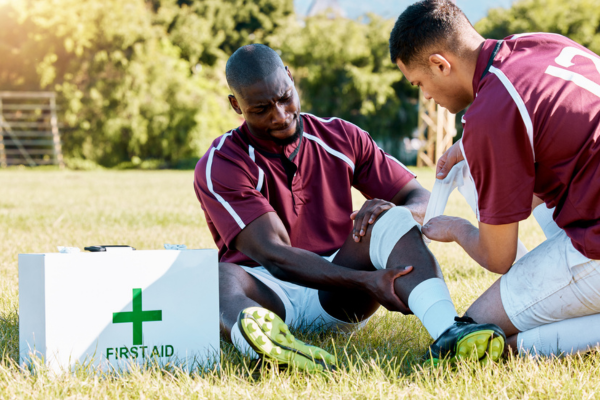
While musculoskeletal injuries are common on the sideline, the team physician must also be prepared to manage life-threatening emergencies. These situations often unfold rapidly, and having a structured approach can make all the difference. For a more comprehensive overview, readers are encouraged to consult Sideline Emergencies: A Review of Best Practices by Caitlin Chambers, MD and Logan Reitz, MD that appeared in the Fall 2023 edition of Sports Medicine Update. Below is a focused summary of the most critical conditions a physician may encounter on the field.
- Sudden Cardiac Arrest
If an athlete collapses without contact or bracing themself and is unresponsive, assume sudden cardiac arrest until proven otherwise. Immediate action is critical: early activation of EMS, initiation of high-quality CPR, and rapid defibrillation using an AED are key to success.19 Knowing where the AED is located before the game begins and confirming that sideline personnel are also aware of its location should be part of every pregame checklist.
- Cervical Spine Injury 20
In the event of a suspected spinal injury, the facemask should be removed promptly to allow for airway access, but the helmet and shoulder pads should remain on to limit cervical motion and prevent iatrogenic injury.2 If removal is necessary for CPR or AED pad placement, both the helmet and shoulder pads must be removed by trained personnel to maintain cervical spine alignment.3
Another common condition is the "stinger" or brachial plexus neuropraxia, which typically presents with unilateral symptoms such as burning or numbness in one arm. 21 Return to play is only appropriate once the athlete’s symptoms have resolved and their physical exam is normal. The athlete should not return to play if symptoms are bilateral, as further workup is indicated.22
- Concussion
Concussions are among the most frequently encountered injuries on the sideline, particularly in football and soccer.23 The SCAT6 (Sideline Concussion Assessment Test) tool is recommended for initial evaluation and can be easily accessed on a smartphone.24 Begin by addressing the airway, breathing, and circulation, and rule out any cervical spine involvement before proceeding with a neurological assessment.
Athletes diagnosed with concussion should be removed from play and not return until they are completely symptom-free and have completed the return to play protocol successfully.23 In the immediate post-injury period, reassessment should occur every 20 to 30 minutes for the first hour, and again before the athlete is discharged into the care of a responsible adult.24 If any red flags emerge such as worsening headache, repeated vomiting, or altered consciousness, transfer the athlete to the nearest hospital as neuroimaging may be warranted to rule out intracranial hemorrhage.
- Respiratory Emergencies
Asthma can manifest initially during exertion, particularly in athletes without a prior diagnosis. Physicians should be familiar with sideline treatment protocols, including the use of rescue inhalers, such as albuterol with a spacer.25
Anaphylaxis is another emergency that may result from food, medications, insect stings, or exercise. It requires rapid recognition and treatment with epinephrine, with likely transport to the hospital for further monitoring and treatment with antihistamines and corticosteroids as needed.8
Tension pneumothorax, though rare, is life-threatening and requires immediate needle decompression. This is performed with a 14-gauge needle inserted at the fifth intercostal space along the anterior axillary line, just above the rib to avoid damaging the neurovascular bundle.9
- Heat Illness
Heat-related illness spans a wide spectrum, from mild cramps to life-threatening heat stroke. Team physicians should familiarize themselves; consider this review from Letha Griffin, MD, PhD, and Tanya Maxwell, MS, ATC from the Summer 2024 edition of Sports Medicine Update. The NCAA requires screening for conditions like sickle cell trait that can increase susceptibility.26 Early recognition and rapid cooling are essential to prevent progressing to severe illness.
- Mental Health Emergencies
High profile athletes such as Michael Phelps and Simone Biles publicly addressing their mental health has opened the door for vulnerability among athletes and awareness among team physicians. Studies have shown mental health disorders among athletes occur in 5% to 35% of elite athletes.29 The biopsychosocial approach discussed earlier is a critical approach for the long-term care of athletes. Condition-specific tools like the PHQ-9 for depression and GAD-7 for anxiety can be employed, with consideration of newer tools such as the SMHAT-1 and SMHRT-1, which are designed for screening in elite level athletes.27-28
Conclusion
Sideline coverage is more than being present at sporting events. It is about leadership, preparation, and collaboration. Sports medicine is an interdisciplinary team, and the team physician is the captain. The team physician is responsible not only for clinical decision-making but also for orchestrating the broader medical response. This begins with reviewing the EAP before every event and extends to clearly defining roles among your sideline team and ensuring everyone is equipped and confident in executing their responsibilities.
Preparation is not only a reflection of professionalism, but also of good leadership and excellent patient care. Conducting a pregame huddle, checking equipment accessibility, and running through potential emergency scenarios can make a significant difference in outcomes. While most events proceed uneventfully, emergencies can occur. In those moments, a well-prepared physician can provide calm, decisive leadership and medical care that makes a difference.
Similar to the sports we support, sideline coverage is a team effort. When everyone knows their role and works together, the outcomes improve. Be proactive, stay prepared, and continue to refine your approach. Consider saving this article as a reference and check out AOSSM’s virtual Team Physician Series, which offer further education on a framework for sideline decision-making and further review of both musculoskeletal and nonmusculoskeletal injuries.
References
- Pike AM, Magnusson H, et al. Emergency action plans in secondary schools: investigating implementation practices. J Athl Train. 2024;59(3):254-260. PMID: 38918009
- Swartz EE, Boden BP, Courson RW, et al. National Athletic Trainers’ Association position statement: acute management of the cervical spine-injured athlete. J Athl Train. 2009;44(4):306-331. PMID: 15262662
- Pollard KA, White RD, Callender L, et al. Equipment removal for the cervical spine-injured athlete: a review of current best practices. Sports Health. 2020;12(6):523-529. PMID: 32579669
- Drezner JA, Toresdahl BG, Rao AL, et al. Outcomes from sudden cardiac arrest in US high schools with automated external defibrillators. Circulation. 2020;142(2):139-149. PMID: 32516193
- Drezner JA, Harmon KG, Asif IM, et al. Survival trends in sudden cardiac arrest in US high school athletes with and without an on-site AED. Br J Sports Med. 2021;55(12):699-706. PMID: 34357888
- Page RL, Joglar JA, Kowal RC, et al. Use of automated external defibrillators at sports venues: association with improved neurologic outcomes. Circulation. 2018;137(10):978-985. PMID: 29463609
- Casa DJ, Almquist J, Anderson SA, et al. The Inter-Association Task Force for preventing sudden death in secondary school athletics programs: best practices recommendations. J Athl Train. 2013;48(6):546-553. PMID: 15514519
- Simons FE, Ardusso LR, Bilò MB, et al. World Allergy Organization anaphylaxis guidelines: 2013 update of the evidence base. World Allergy Organ J. 2013;6(1):24. PMID: 23160347
- Laan DV, Vu TD, Thiels CA, et al. Needle thoracostomy: Clinical correlation with catheter length. Am J Emerg Med. 2016;34(1):134-138. PMID: 26488319
- Derse AR. Legal and ethical issues concerning sports team physicians. Clin Sports Med. 2012;31(4):565-573. PMID: 23038784
- Breslin G, Shannon S, Haughey TJ, et al. A systematic review of interventions to increase awareness of mental health and well-being in athletes, coaches, officials and parents. Syst Rev. 2017;6(1):177. PMID: 28410329
- Bell DR, Post EG, Trigsted SM, et al. Prevalence of sport specialization in high school athletics: A 1-year observational study. Am J Sports Med. 2017;45(6):1419-1425. PMID: 28288281
- Fleisig GS, Andrews JR, et al. Youth baseball pitch count and age guidelines. Orthop J Sports Med. 2024;12(2):23259671241237835. PMID: 38485729
- Mohtadi AR, Goodrich LR, et al. Insurance status impacts timing of ACL surgery and follow-up: A pediatric population study. J Pediatr Orthop. 2023;43(10):e747-e752. PMID: 36210171
- Sabatino MJ, McCarthy MM, et al. Socioeconomic disparities impact utilization patterns and outcomes after pediatric sports injuries. J Pediatr Orthop. 2023;43(10):e753-e758. PMID: 36263850
- Kerr ZY, Marshall SW, Dompier TP, et al. College football practice injury rates and preseason practice injuries. Am J Sports Med. 2015;43(11):2644-2652. PMID: 27635412
- Kerr ZY, Marshall SW, Dompier TP, et al. Concussion incidence and trends in 20 years of NCAA football data. Am J Sports Med. 2015;43(4):1087-1095. DOI: 10.1177/0363546515570622
- Alentorn-Geli E, Mendiguchia J, Samuelsson K, et al. Prevention of anterior cruciate ligament injuries in sports—Part I: Systematic review of risk factors. Knee Surg Sports Traumatol Arthrosc. 2009;17(7):705-729. PMID: 17710181
- Maron BJ, Doerer JJ, Haas TS, et al. Sudden deaths in young competitive athletes: analysis of 1866 deaths in the United States, 1980–2006. Circulation. 2009;119(8):1085-1092. PMID: 19734506
- Boden BP, Tacchetti RL, et al. Catastrophic cervical spine injuries in high school and college football players. Am J Sports Med. 2016;44(2):429-433. PMID: 26864974
- Cantu RC. Traction neuropraxia of the brachial plexus (stingers). Clin Sports Med. 2008;27(3):481-488. PMID: 19691361
- Packer JD, Shaath MK, et al. Return-to-play guidelines for cervical spine injuries in sports: a review. J Neurosurg Spine. 2019;31(3):301-308. PMID: 30741724
- McCrory P, Meeuwisse W, et al. Consensus statement on concussion in sport: the 5th international conference on concussion in sport. Br J Sports Med. 2017;51(11):838-847. PMID: 30932451
- Echemendia RJ, Meeuwisse W, et al. The SCAT5: Sport concussion assessment tool–5th edition. Br J Sports Med. 2017;51(11):851-858. PMID: 28673408
- Becker JM, Rogers J, et al. Asthma deaths during sports: Report of a 7-year experience. J Allergy Clin Immunol. 2005;116(6):1303-1305. PMID: 16282030
- Drezner JA, O’Connor FG, Harmon KG, et al. AMSSM position statement: Cardiovascular preparticipation screening in athletes. Clin J Sport Med. 2016;26(1):e1-e8. PMID: 26527715
- Yang JS, Brody K, DiFiori JP, et al. Advances in emergency preparedness and injury assessment for sideline coverage in sport. Br J Sports Med. 2024;58(6):353-360. PMID: 38616326
- Kerr ZY, Kroshus E, Grant JA, et al. Concussion education in U.S. collegiate sport: what is happening and what do athletes want? Health Educ Behav. 2020;47(3):302-311. PMID: 32948518
- Reardon CL, Hainline B, Aron CM, et al. Mental health in elite athletes: International Olympic Committee consensus statement (2019). Br J Sports Med. 2019;53(11):667-699. PMID: 31097450
