
There are two types of growth plates in children. One is located at the end of long bones and is where growth in height or length occurs. The other is called an apophysis. An apophysis is a growth plate where a muscle or tendon attaches. This type of growth plate does not contribute to growth in height of length. Apophyseal injuries are usually from overuse and caused by inflammation where the tendon attaches to bone. In kids, especially during periods of rapid growth, the tendons do not grow as fast as bone causing tension at the apophysis. This injury can begin as inflammation and pain. Occasionally, there can be an acute, more violent injury resulting in a fracture of the apophysis.
How are apophyseal injuries different than other growth plate injuries?
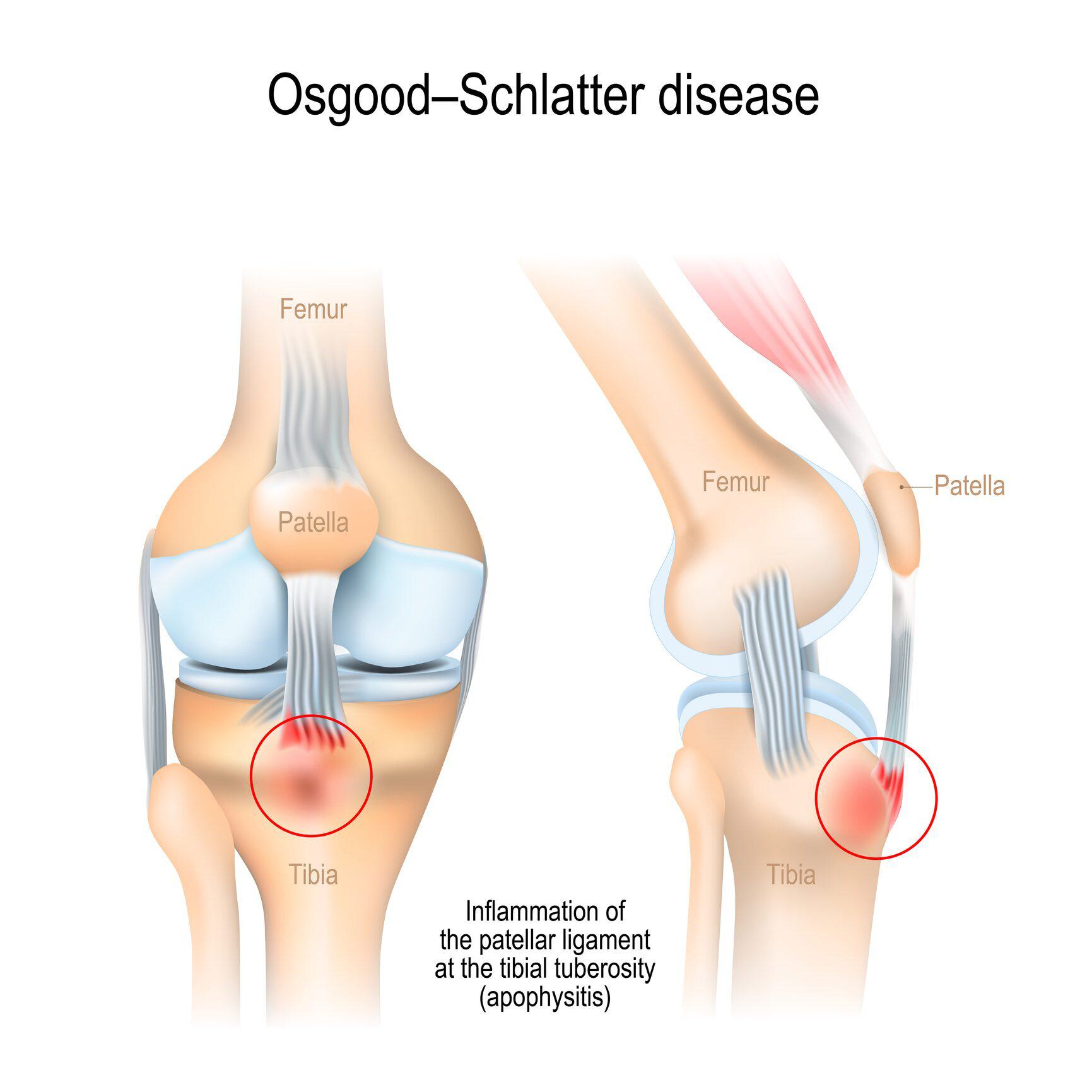
Apophyseal injuries generally do not affect growth, although certain apophyseal injuries may result in deformity if not treated appropriately. Apophyseal injuries occur where tendons attach to bone (Figure 1).
Who is most at risk for apophyseal injuries?
Apophyseal injuries most often occur in sports activities, particularly in children between the ages of 8 to 15. Youth athletes, who participate in sports with forceful eccentric contractions (when the muscles are being lengthened), are most at risk for apophyseal injuries, due to the weakness at the immature apophyseal growth plate. Other contributing factors to this injury include rapid growth and muscle weakness.
Apophyseal injuries tend to occur most often in kids who are involved in running, pivoting, throwing, kicking, and jumping sports. The most common sports where these injuries are observed are track and field (especially sprinters and long jumpers), cross country, soccer, baseball, basketball, tennis, football, dance, and gymnastics. However, apophyseal injuries can be seen in any youth sport, so this list is not exclusive.
What are some of the most common apophyseal injuries?
Osgood Schlatter’s Disease
There is a bony prominence on the shin bone right below the kneecap called the tibial tuberosity. The patellar tendon extends from the patella (kneecap) and attaches at this site. Inflammation at the tibial tuberosity in a growing child is known as Osgood Schlatter’s Disease. This injury typically affects kids between ages 10–14.
Figure 1. Osgood Schlatter’s Disease— an apophyseal injury on the shin bone, below the knee.
Sever’s Disease (calcaneal apophysitis)
There is a site on the back of the heel where the Achilles tendon attaches to the growth plate. Inflammation at this site is known as Sever’s Disease. The inflammation at this growth plate can also occur from sports like gymnastics and soccer. This injury typically affects kids between ages 8–15.
Sinding-Larsen Johansson Disease (SLJ)
SLJ is a site of pain and inflammation of the growth plate at the bottom of the knee cap. SLJ is less common than Osgood Schlatter’s Disease and unlike Osgood Schlatter’s, SLJ does not occur on the shin bone, but occurs at the very bottom of the knee cap. This injury typically affects kids between ages 8–10.
Apophysitis of the Pelvis/Hip
The most common sites for pain and inflammation are at the anterior superior iliac spine (ASIS), anterior inferior iliac spine (AIIS), ischial tuberosity (sit bones), and iliac crest (top of pelvic wing). When the hip muscles are tight or overworked, this can cause increased tension to be placed on the apophyses. An acute fracture can also occur in these areas, usually from a violent muscle contraction such as a kick. This injury typically affects kids between ages 14–18.
Little League Elbow (medial epicondylar apophysitis)
The medial epicondyle, or inner side of the elbow, is the attachment site for the forearm muscles used in throwing. Repetitive pitching puts a large amount of tension on this growth plate, causing it to become inflamed. This injury typically affects kids between ages 8–15.
Iselin’s Disease (fifth metatarsal apophysitis)
The fifth metatarsal is located on the outer edge of the foot. Repetitive jumping and running leads to increased stress on this area that may lead to injury. Kids between the ages of 8–13 are at risk for Iselin’s.
What are the signs and symptoms of an apophyseal injury?
- Pain or tenderness at the area of the apophysis
- Gradual onset of pain without known mechanism of injury
- Swelling at the area of the apophysis
- Muscles around the site of the apophysis are tight
- Pain worsens with stretching or activity, and is typically relieved with rest
What should I do if I suspect an apophyseal injury?
If you suspect an apophyseal injury, it is essential you tell a coach or parent and to seek timely care from a sports medicine specialist. A sports physician and physical therapist will be able to come up with a plan for the best treatment approach regarding the severity and stage of the injury.
How are apophyseal injuries treated?
Apophyseal injuries are treated differently depending on the severity and location of the injury. In most cases, the young athlete will be able to continue training and competing
in their sport with relative rest (staying active in sport but resting the area of injury when pain levels increase). Icing and pain medications with anti-inflammatory properties may be used to decrease inflammation. A tendon strap
or supportive heel cup may be beneficial with certain apophyseal injuries like Osgood Schlatter’s disease and Sever’s disease. Apophyseal fractures usually require a period of rest and rehabilitation prior to safe, gradual return to sport. In some more severe cases, the area of injury may need to be casted or splinted to allow the apophysis to heal. Additionally, the doctor may provide follow-up care
to determine that the apophysis is healing properly. Physical therapy during or after healing can be quite helpful in restoring proper mechanics and reducing the risk of reinjury.
What does physical therapy look like for apophyseal injuries?
The first physical therapy session will be an evaluation to help determine what kind of activities make the pain worse and what makes it feel better. This evaluation will also explore muscle strength, muscle tightness, and biomechanical issues that may be contributing to the pain. Your physical therapist will provide you with a home program and education on the best plan of care for your injury to help you return to sport.
Future physical therapy sessions will help progress your child to their goals. It is important not to rush this process as an apophysis can become inflamed and painful again if proper care isn’t taken. Gentle stretching/range of motion, basic strengthening principles and a step wise return to sport progression will be followed weekly to safely help your child return pain-free to their activities. Your child’s physical therapist and sports medicine doctor will work together to determine when they are cleared to fully return.
As a child is typically in a growth spurt during times of apophyseal injuries, your physical therapist will recommend that you continue to complete your PT exercises even after being discharged to help prevent any future injury.
How are apophyseal injuries prevented?
Training programs should involve the use of a variety of drills to limit excessive repetitive movements (e.g., pitch counts in youth baseball) especially during periods of rapid growth, when the apophyses are most vulnerable. Additionally, training programs should include physical conditioning, strengthening, neuromuscular control (balance, strength, and agility), and stretching to prevent muscles from getting tight to help reduce the risk for apophyseal injuries.
Health care professionals should promote communication with the youth athlete’s coach to identify symptoms of an apophyseal injury, and for the youth athlete to seek proper treatment as soon as possible. Early detection of apophyseal injuries is key to a better prognosis and earlier return to play.
Early sports specialization and overtraining are the most significant contributing factors to all youth injuries including apophyseal injuries. The best prevention is to avoid sports specialization before middle to late adolescence.
Reviewed November 2025 by: Matthew V. Smith, MD, MSc
Contributing Experts: Rachel Meyers, SPT; Hannah Jasurda, PT, DPT; Aaron Provance, MD
Sports Tips are brought to you by the American Orthopaedic Society for Sports Medicine. They provide general information only and are not a substitute for your own good judgment or consultation with a physician.
For more tip sheets and to find an expert near you, visit sportsmed.org/STOP
Copyright ©2025. American Orthopaedic Society for Sports Medicine. All rights reserved.
References
1. Longo U, Ciuffreda M, Locher J, et al. Apophyseal injuries in children’s and youth sports. British Medical Bulletin. 2016. 120(1):139-59.
2. Pal S. Growth-plate injuries: a diagnostic challenge. Lower
Extremity Review Pediatrics. 2017.
3. Mooney C, Pujalte G. Sinding-Larsen-Johansson Disease (SLJ).
AMSSM Sports Med Today Tip Sheet.