
Baseball is a complex sport demanding an athlete to be physically well rounded by maintaining flexibility, balance, agility, endurance, speed, and strength standards appropriate for their level of play. Regardless of position, baseball players should have their technique and baseline strength assessed by a sports medicine professional with a background in throwing motion assessment in order to address specific concerns before the demands of the season begin.
Injury prevention for youth baseball often focuses on arm care due to the high incidence of throwing arm injuries in youth pitchers. It is important, however, to educate and monitor players at all positions regarding safe play habits, proper technique, and warning signs of injury. Once an injury to any area of the body has occurred, observe careful return to play strategies monitored by a sports medicine professional. This is of particular concern for pitchers whose mechanics can be hindered significantly by injury to another body area (e.g., ankle injury).
Important Resources
Please visit usabaseball.com/athlete-safety to learn more about common baseball-related injuries.
Pitch Smart is a comprehensive resource for safe pitching practices from USA Baseball and Major League Baseball. Visit mlb.com/pitch-smart
Injury Prevention Tips
Base Running and Sliding
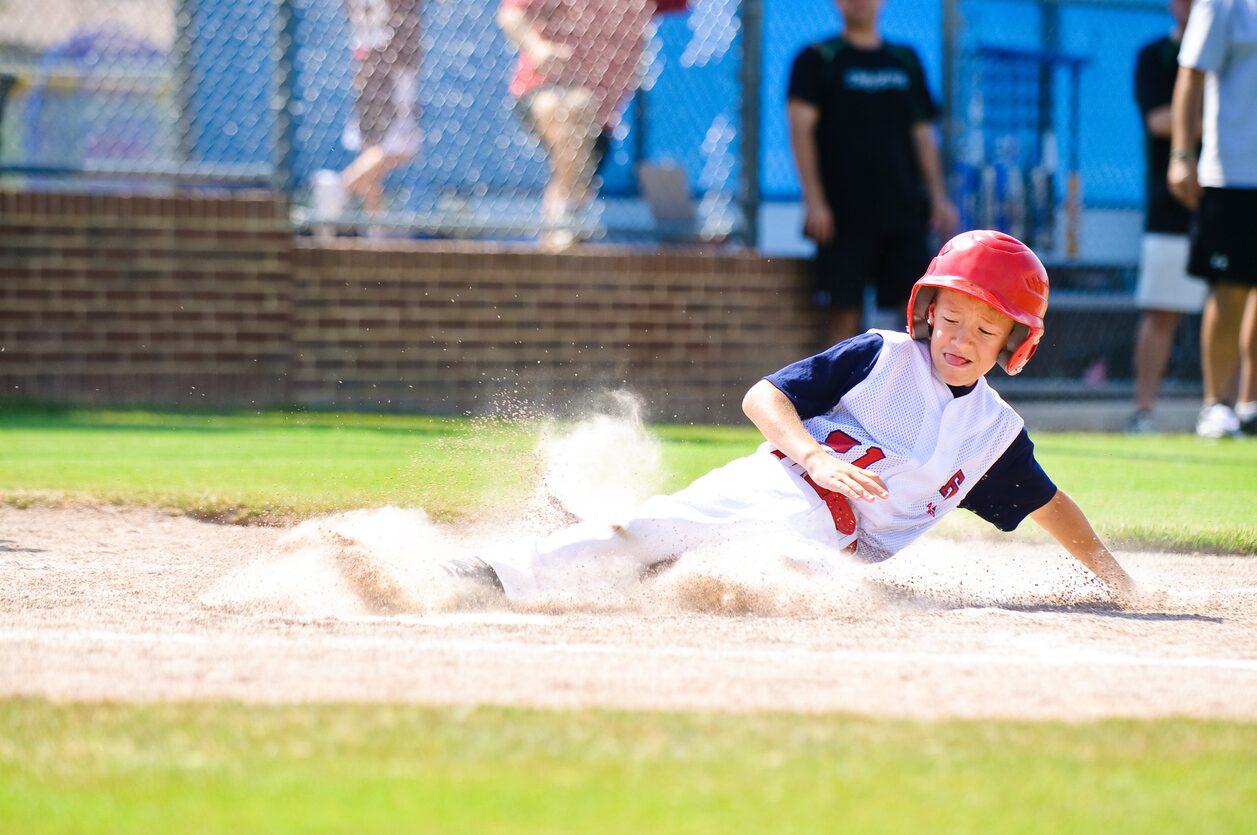
- Do not teach sliding for children under 10.
- Avoid collisions by discussing safe play habits for runners and fielders.
- When initially learning to slide, players should slide without a base and progress to breakaway bases, if available, until the sliding technique is mastered.
Arm Care
- Youth baseball players should NEVER throw with pain.
- Avoid year-round play. Take active rest of at least 3 months each year. Players can participate in physical activity or other sports but should not perform throwing drills or overhead activities (e.g., javelin throwing, quarterback, tennis).
- Warm up at least 10 minutes. Start with jogging, dynamic movements, and stretching. Take short toss at low velocity before working up to longer distance at higher speeds appropriate for the position played.
- Listen to your body. Do not play through shoulder or elbow pain.
- Athletes may observe decreased velocity or accuracy as an early sign of arm fatigue and an indication to stop throwing for the day.
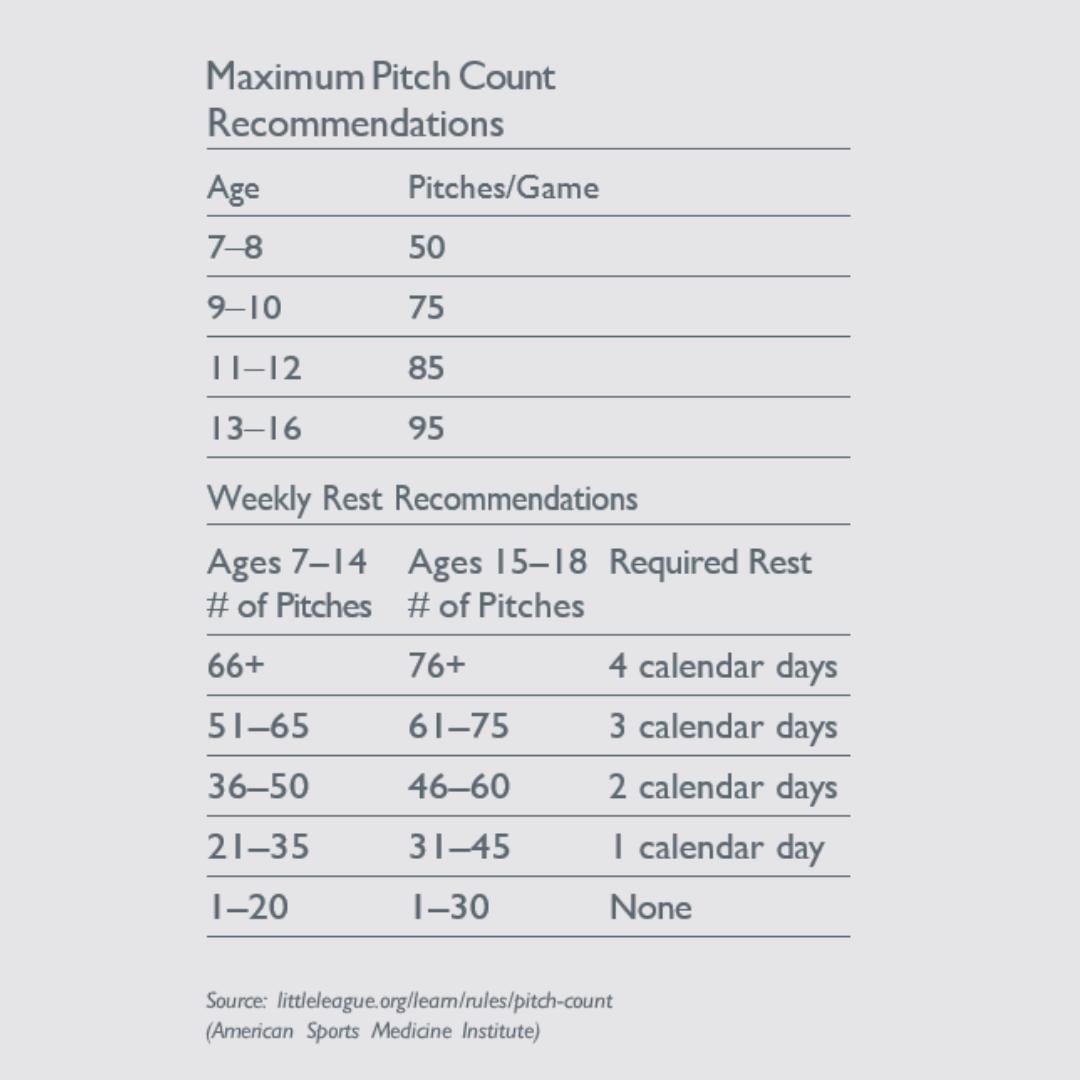
- Parents and coaches should monitor pitch counts and signs of fatigue.
- Avoid playing for multiple teams at the same time if playing pitcher or catcher. Discuss and follow limits with each coach when playing for multiple teams.
- Learn and follow current recommendations for maximum pitches, appropriate pitches by age, frequency of play, and position rotations. Following these recommendations may reduce the incidence of overuse injuries by 50%.
Common Baseball Injuries
Acute injuries are the result of a single traumatic episode and commonly occur when being struck by a ball or sliding into base. Protect contusions (bruises) from additional impact while healing by wearing a guard or padding. For sprains of the hand, wrist, shoulder, ankle, or foot, treat with ice and range of motion exercises.
If signs of fracture are present such as deformity, loss of sensation, or significant swelling or pain, the athlete should be evaluated by a medical doctor,
Chronic and overuse injuries are characterized by repetitive stress to a muscle, tendon, ligament, cartilage, or bone. Symptoms of injury include pain during activity, ache during rest, stiffness, swelling, discoloration, loss of motion or strength, favoring the sore area, or loss of velocity or control. Injuries may occur to any part of the body; however, the most common injuries may occur in the shoulder and elbow considering the overhead nature of the sport. Consult a sports medicine doctor specializing in care of injuries in youth baseball players for evaluation and consideration of treatment options.
Common shoulder and elbow problems include: proximal humeral epiphysiolyis (i.e., youth throwing shoulder syndrome), internal impingement, scapular dyskinesis, glenoid and capitellar osteochondritis dissecans, medial epicondyle injuries, ulnar collateral ligament injuries, elbow posteromedial impingement, elbow tendinitis, and ulnar neuritis.
Seeking Appropriate Care
Many injuries can be treated with active rest from sports participation until primary symptoms subside. Active rest should include activities to address flexibility, strength, balance, and form, for successful reentry into sport. When applying ice to an injured area to decrease pain or swelling, use crushed ice in a bag for 20 minutes as often as every 2 hours.
If symptoms persist, and for any injury involving pain, swelling, dysfunction, loss of sensation, uncontrolled bleeding, or concussion related symptoms, visit a trained sports medicine professional for evaluation, care, and return to play guidance.
Reviewed September 2025 by: Henry Bone Ellis, Jr., MD
Contributing experts: James R. Andrews, MD; Glenn S. Fleisig, PhD; Daryl C. Osbahr, MD; Therasa Quackenbush, MS, LAT, ATC; Harrison Youmans, MD, CAQSM
Sports Tips are brought to you by the American Orthopaedic Society for Sports Medicine. They provide general information only and are not a substitute for your own good judgment or consultation with a physician.
For more tip sheets and to find an expert near you, visit sportsmed.org/STOP
Copyright ©2025. American Orthopaedic Society for Sports Medicine. All rights reserved.