
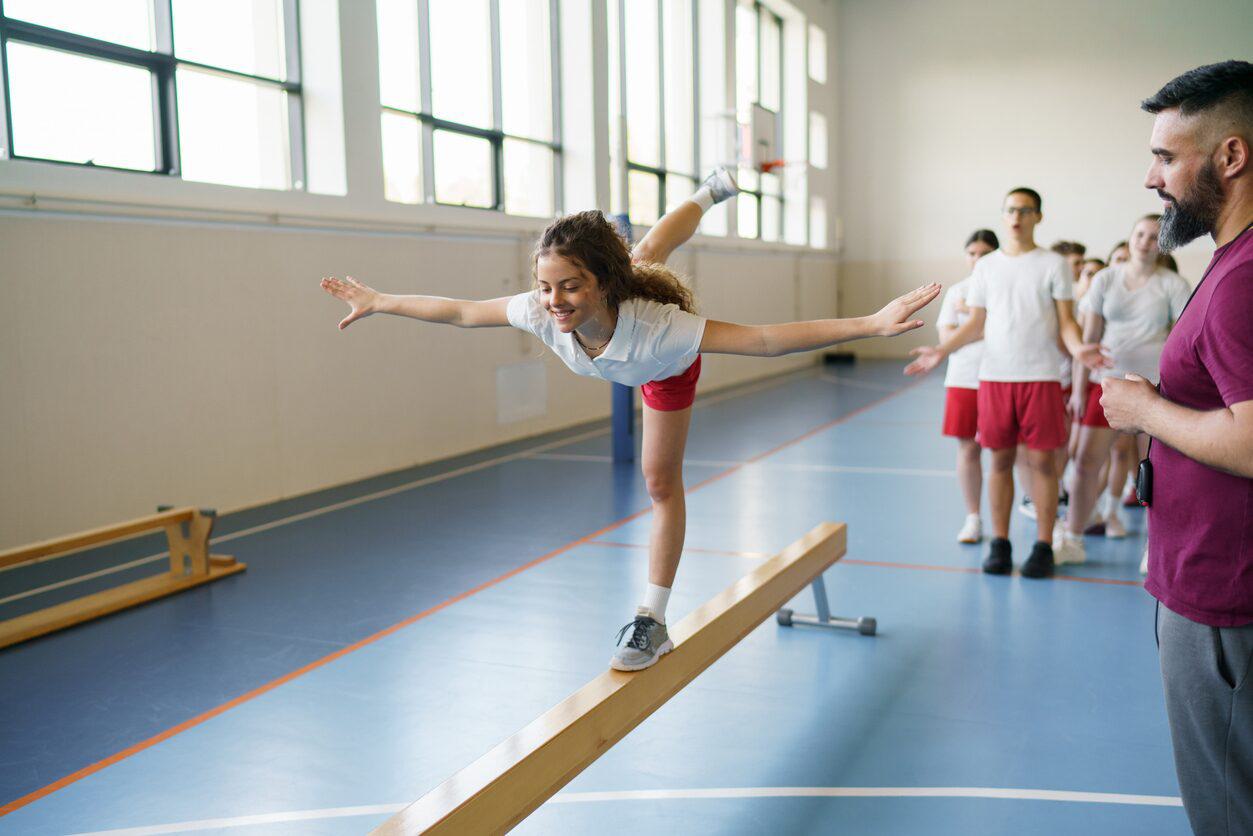
Each year more than 86,000 gymnastics-related injuries are treated in hospitals, doctors’ offices, clinics, and ambulatory surgery centers. Gymnasts must consistently prepare for the rigorous physical and emotional toils that the sport requires. With the complexity of routines and increasing year-round training requirements and specialization, the risk of potential injury increases. Injuries most commonly occur in the ankles, feet, lower back, knees, elbows, wrists, and hands, often from repetitive overuse or simple stress. Injuries are rarely severe, but if left untreated they can lead to chronic pain, avascular necrosis, and even fractures
What are common injuries and treatments?
Labral Tears
Labral tears in the shoulder may occur during any gymnastic exercise, but ring and bar specialists seem particularly vulnerable. It is characterized by pain that initially resolves but tends to recur with return to sport. An MRI can be helpful in establishing a definitive diagnosis.
Wrist Sprains
While normal wrists are not weight-bearing joints, in gymnastics, the wrist is subjected to repeated forces that can exceed twice the body weight. This can lead to stress injuries, particularly in young gymnasts, called “gymnast’s wrist”. The first step in treating wrist pain is to reduce the training volume of the athlete, relieve symptoms, and to participate in only pain-free activities. After an injury, gymnasts should avoid extensive pressure on the wrist joint for six weeks. If the gymnast is experiencing pain with non-gymnastic activities of daily living, using a brace or cast to immobilize the wrist temporarily may be helpful.
Anterior Cruciate Ligament (ACL) Injury
ACL injuries can result when a gymnast lands “short” or is over-rotated while tumbling, dismounting, or vaulting. A “pop” may be heard or felt followed by knee swelling. An evaluation by an orthopedic surgeon and and MRI is used to confirm ACL injury. As with other high-demand, pivoting sports, ACL reconstruction is recommended for gymnasts who wish to return to full sports participation.
Achilles Tendon Injury
Gymnasts can suffer from a variety of injuries to the Achilles tendon located just above the back of the heel, as a result of the repetitive stress of jumping and landing. Achilles tendinitis results in calf soreness that is aggravated with jumping and landing. Treatment should initially consist of ultrasound, stretching, activity modification, and calf exercises. Foot immobilization for seven to ten days may be beneficial for severe symptoms.
Foot and Ankle Injuries
Injuries to the foot and ankle are common in gymnastics. Acute injuries are usually sprains which can be minor or more serious. Swelling, bruising and tenderness directly over the bones are signs of a more serious injury. Minor injuries typically have tenderness limited to one side of the joint without significant swelling. Serious injuries require evaluation by a qualified professional while return to participation after a minor injury is often possible within
a week if there is no pain (or limping) with weight bearing activity. Protection with taping or a brace can aid recovery and reduce the risk for reinjury. Chronic ankle pain or repeated injuries are worrisome and require evaluation before continuing with participation.
Lower Back Injuries
The cause of low-back pain can include muscle strain, ligament sprain, fracture, and/or disc disorders. Frequently, low-back pain will worsen with activity, especially with extension movements, such as arching the shoulders backwards. Low-back pain in gymnasts related to muscular strain or ligament sprain usually responds to rest and physical therapy exercises. Persistent back pain is uncommon and should not be ignored. An MRI or a bone scan are often helpful to rule out more significant injuries.
Elbow Injuries
Elbow injuries can occur in gymnastics either from an acute traumatic injury, where excessive force from a fall leads to potential ligament tears or bone fractures. They can also occur from repetitive overuse from the unique weight-bearing demands of gymnasts through the upper extremity, leading to chronic pain and potentially growth plate abnormalities in the young gymnasts’ elbow (i.e. Panner disease). Treatment starts with reducing training volume and frequency, avoiding pain-inducing activities, and an evaluation by an orthopedist.
How can injury be prevented?
Many gymnastics injuries can be prevented by following proper training guidelines, using safety equipment, and incorporating the following tips:
- Wear all required safety gear whenever competing or training—special equipment may include wrist guards, hand grips, footwear, ankle or elbow braces, and pads.
- Do not play through the pain—if you are hurt, see your doctor and follow instructions for treatment and recovery fully.
- Make sure first aid is available at all competitions and practices.
- Inspect equipment to ensure that it is in good condition, including padded floors, secured mats under every apparatus, and safety harnesses for learning difficult moves.
- Insist on spotters when learning new skills.
- Warm up muscles with light aerobic exercise, such as jumping jacks or running in place, before beginning training or new activities.
Reviewed November 2025 by Andrew Bi, MD
Expert Consultants: Grant L. Jones, MD, Brian R. Wolf, MD, MS, Andrew S. Bi, MD
STOP Sports Injury tip sheets are brought to you by the American Orthopaedic Society for Sports Medicine. They provide general information only and are not a substitute for your own good judgment or consultation with a physician.
For more tip sheets and to find an expert near you, visit sportsmed.org/STOP
Copyright ©2025. American Orthopaedic Society for Sports Medicine. All rights reserved