

Introduction
Casual Olympic viewers will have turned on the TV to occasionally glimpse a variety of sled-like objects hurtling down the Cortina Sliding Centre “Eugenio Monti” in Cortina d’Ampezzo, Italy, possibly unaware they may be viewing three separate, extreme, winter sports. What exactly are these winter sports and what makes them unique? Bobsleigh, luge, and skeleton are the three main Olympic sliding sports, each defined by extreme velocities, intense gravitational forces, and distinct athlete–sled interactions that confer unique musculoskeletal demands.
Bobsleigh
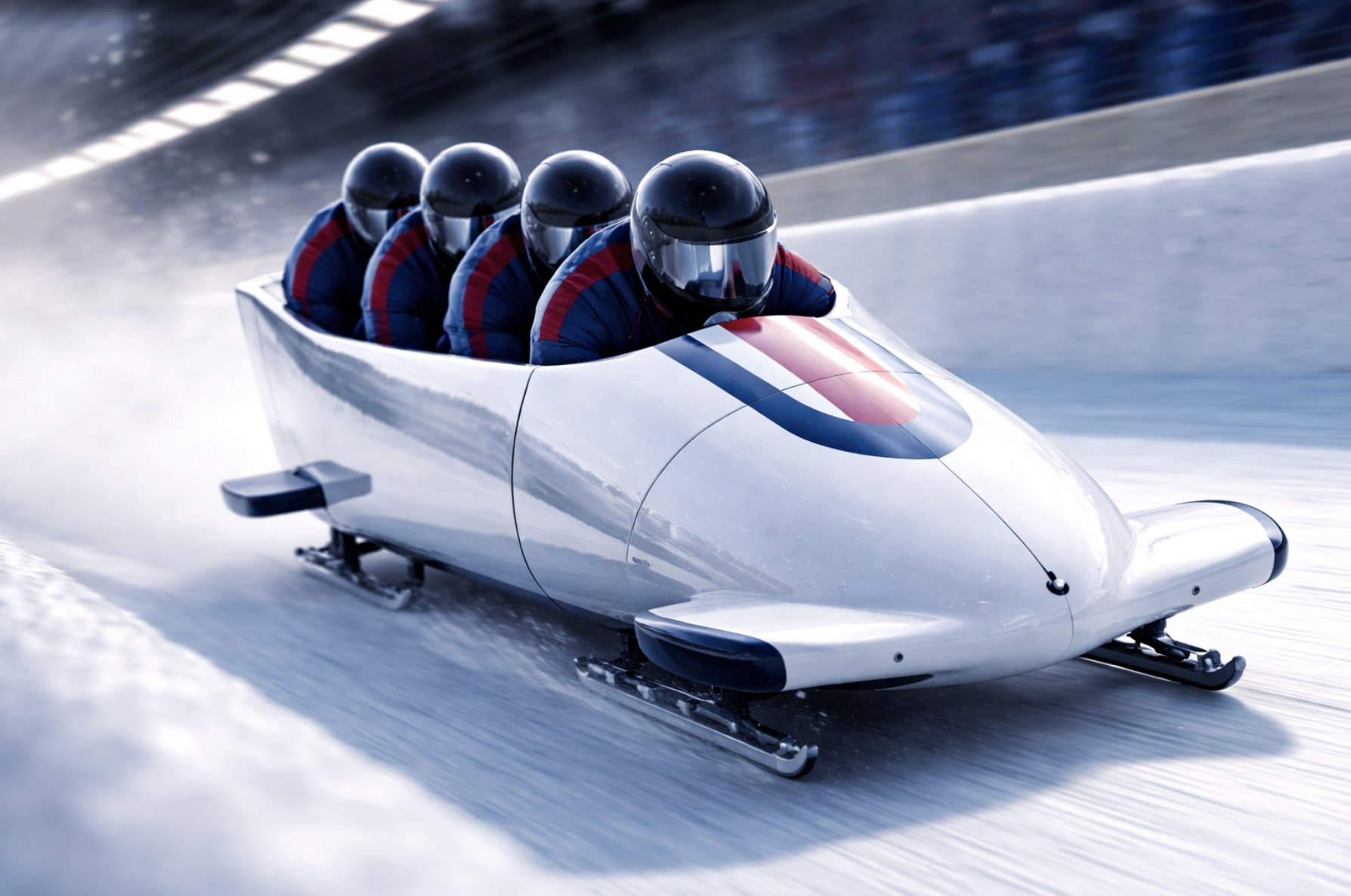
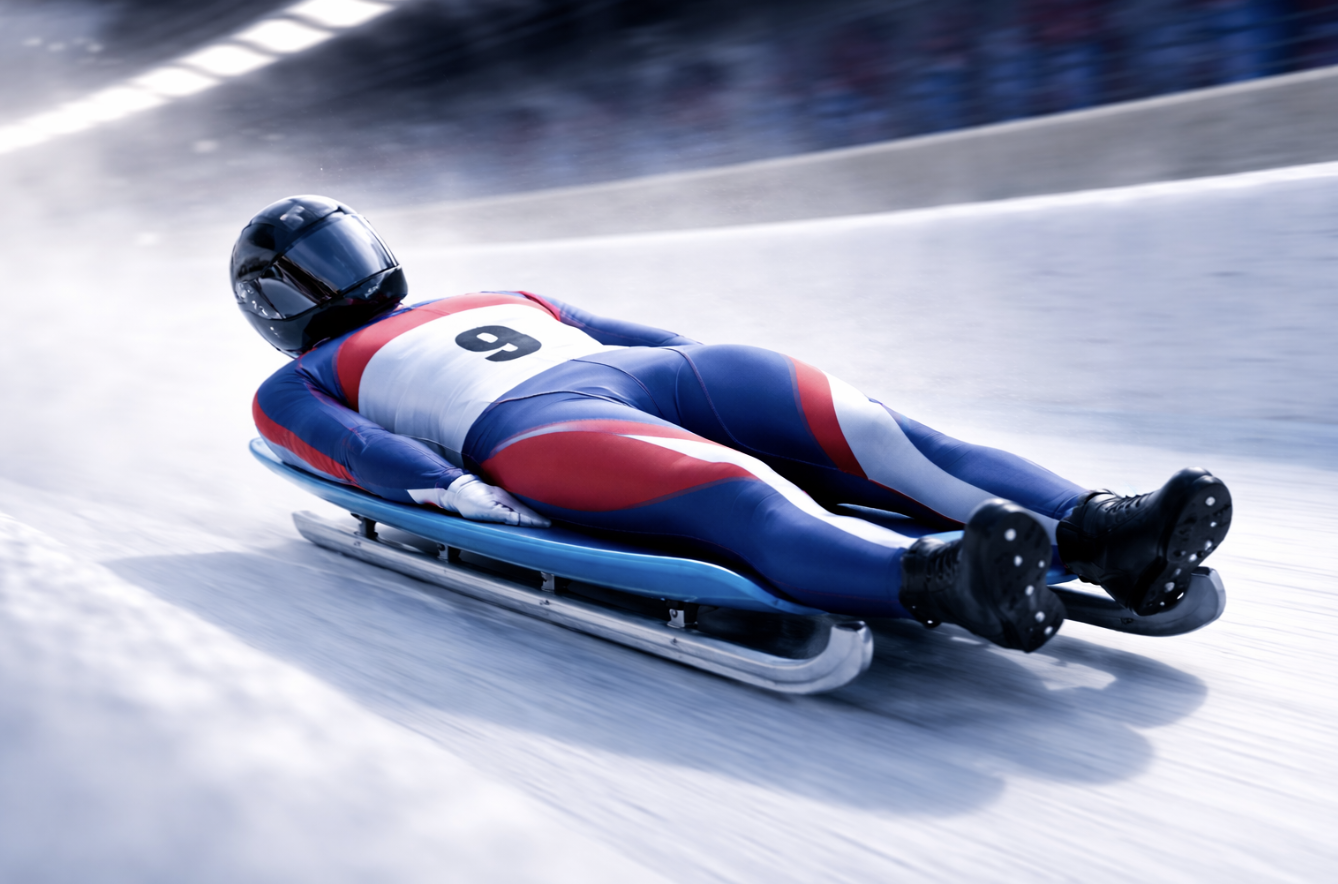
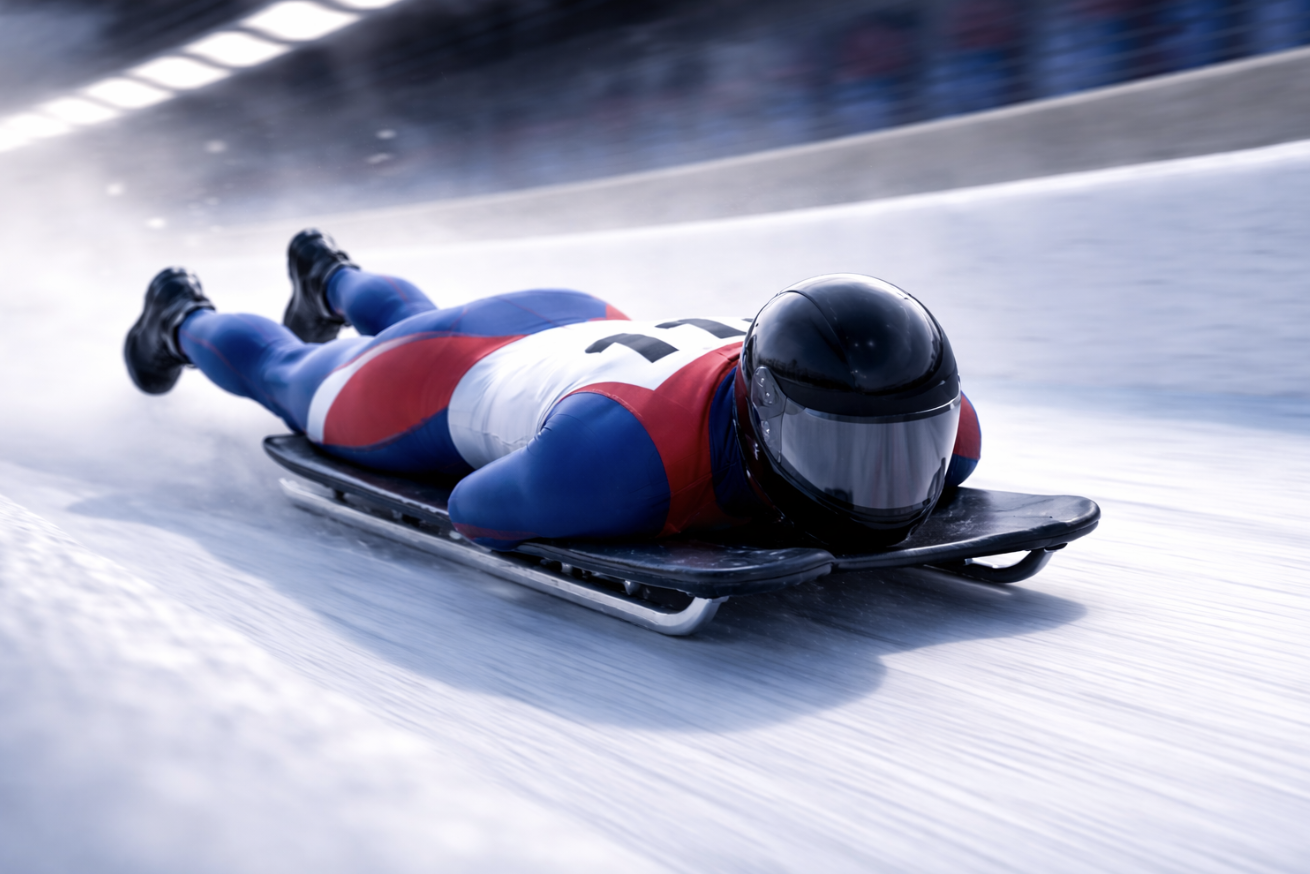
Bobsleigh involves one to four athlete(s) who sprint to push a multi-hundred-kilogram sled before jumping in seated, and navigating an ice track at speeds exceeding 130 km/h, exposing athletes to substantial axial loading and high-magnitude cornering forces.3 It has the longest history, having been created in Switzerland in the 1860s and established as an Olympic sport in 1924. In contrast, luge is a primarily supine, feet-first discipline in which a single or pair of athlete(s) start seated, propelling themselves with their arms, until they gain enough speed to race a low-profile sled lying supine, using subtle shifts in body position. Luge is the fastest winter Olympic sport, with athletes reaching up to 150 km/h, and was initiated in the Olympics in 1964, after an evolution from recreational sledding in Switzerland. Skeleton represents the most exposed form of sliding sport, with a single athlete, with a running start, leaping on to a similarly low-profile sled, descending head-first in a prone position. Common themes among these sliding sports include exposure to occasional sub-zero temperatures, varying levels of extreme gravitational forces, and the requirement for both explosive power as well as repetitive endurance, as training sessions can number over 50 runs throughout the week over a season that is often six months long.3 Despite sharing a common ice track, these sports differ markedly in biomechanics, force vectors, and athlete exposure, leading to sport-specific musculoskeletal injury patterns that warrant individualized consideration.
A review of injury epidemiology in sliding sports by Soligard et al from 2010 Vancouver, 2014 Sochi, and 2018 PyeongChang demonstrated injury rates of 14% to 18% for bobsleigh, 5% to 11% for luge, and 8% to 18% for skeleton.2,6–8 Compared to the average Winter Olympic sport, bobsleigh injury risk was noted to be the highest of all sports, while luge had a relatively lower risk.11 A retrospective review of four years at the Whistler Sliding Center encompassing a total of 43,200 runs reported a breakdown of injuries to be 20% concussions, 39% abrasions, 14% fractures, 20% strains or sprains, and 5% miscellaneous.9 This study by Stuart et al also correlated increasing slider experience with reduced injury frequency, and an incidence of severe injury occurring in <0.1% of all runs, including one fatality due to a track ejection.9 Unique injuries to winter sliding athletes in particular include “ice burns” and “sled head.” Ice burns are friction burns that occur when sliders’ exposed limbs collide with the wall or ice, ranging from first to third degree burns.3 Burn vests are commonly worn, but the extremities remain exposed and are the most commonly exposed. Sled head, while not a formal diagnosis, is a well known phenomenon among sliding athletes in which during repeated track runs, often on bumpy tracks, result in headaches, fogginess, and disequilibrium, and even caused Canada’s skeleton head coach to institute a maximum number of training runs in the lead up to the 2014 Sochi games.4
Bobsleigh places the greatest emphasis on explosive power generation and collision tolerance among the sliding sports. The start phase is critical to performance, requiring maximal sprinting and pushing forces over short distances, often generating peak ground reaction forces comparable to elite track sprinting. As a result, acute and overuse injuries of the lower extremity—including hamstring strains, Achilles tendinopathy, and knee ligamentous stress—are common during training and competition.3 Once seated in the sled, athletes are subjected to substantial axial compression and lateral G-forces, particularly at high-speed curves, where forces may exceed 4–5 Gs (Figure 1). These loads are transmitted through the spine and pelvis, predisposing athletes to cervical and lumbar spine pain, disc pathology, and rib or vertebral stress injuries. McPherson et al performed an in-depth analysis of head and neck impact kinematics using accelerometer mouthguards of 12 elite bobsleigh athletes, demonstrating significant peak linear and angular, velocity and acceleration.5 Additionally, frequent sled impacts with track walls increase the risk of contusions, concussions, and upper extremity injuries, particularly to the shoulders and elbows during loading and bracing maneuvers.
Luge
Luge is characterized by precision control rather than gross power, relying on subtle cervical, truncal, and lower extremity movements to steer the sled at extreme speeds. Athletes start seated and propel themselves using their arms, then maintain a supine, feet-first position with sustained cervical flexion to optimize aerodynamics and visual tracking, resulting in prolonged isometric loading of the neck musculature (Figure 2). Consequently, cervical spine strain, facet irritation, and chronic neck pain are among the most frequently reported complaints. Steering is achieved through repetitive, asymmetric loading of the shoulders, core, and lower limbs against the sled’s runners, which can lead to overuse injuries such as shoulder tendinopathy and paraspinal strains.10 In a longitudinal study of the US Training Center Sports Medicine Clinic in Lake Placid from 1985 to 1992, Cummings Jr. et al demonstrated 407 injuries in 1,043 athletes over 57,244 track runs.1 Contusions (51%) were the most common injury, following by strains (27%), of which neck and upper extremity strains were the most common. Although luge has lower rates of high-impact collisions compared with bobsleigh and skeleton, the sport’s extreme velocities magnify the consequences of loss of control, making concussions (2%) and fractures (3%) possible despite its relatively lower overall injury incidence.1
Skeleton
Skeleton represents the most physiologically and psychologically demanding sliding discipline due to the head-first, prone descent, and minimal separation between the athlete and ice (Figure 3). The start phase involves maximal sprinting followed by a rapid dive onto the sled, exposing athletes to acute shoulder, wrist, and knee trauma. During the run, athletes require significant cervical extension as they lift the head to visualize the track while resisting aerodynamic drag, producing high loads across the cervical spine and posterior neck musculature. Combined with substantial vibration and repeated exposure to high G-forces, this contributes to an increased risk of cervical disc disease, nerve irritation, and concussion. Despite the minimal protective structure, which increases risks of contusions, fractures, and head trauma during crashes, multiple longitudinal and cross-sectional studies have surprisingly found that skeleton does not have a high overall injury incidence compared with other winter sports.4,6–8 As a result, skeleton demonstrates a broad injury profile encompassing both high-energy traumatic injuries and chronic overuse conditions, reflecting the sport’s uniquely exposed and aggressive nature.
Conclusion
Although bobsleigh, luge, and skeleton share the same track, they impose distinct biomechanical and physiological demands that translate into differing injury risks. Recognition of these differences is critical for informing sport-specific training, medical coverage, and injury prevention strategies. As sliding sports continue to progress with increasing speeds and evolving equipment, continued injury surveillance and targeted research will be essential to optimize athlete safety without compromising performance.
References
1. Cummings RS, Shurland AT, Prodoehl JA, Moody K, Sherk HH. Injuries in the sport of luge. Epidemiology and analysis. Am J Sports Med. 1997;25(4):508-513.
2. Engebretsen L, Steffen K, Alonso JM, et al. Sports injuries and illnesses during the Winter Olympic Games 2010. Br J Sports Med. 2010;44(11):772-780.
3. Faltus J, Knowlton-Key J, Howard K, et al. Interdisciplinary Health and Performance Management of the Sliding Athlete: A Clinical Commentary. Int J Sports Phys Ther. 20(11):1640-1652.
4. McCradden MD, Cusimano MD. Concussions in Sledding Sports and the Unrecognized “Sled Head”: A Systematic Review. Front Neurol. 2018;9:772.
5. McPherson AL, Anderson T, Finnoff JT, Adams WM. Head Kinematics and Injury Analysis in Elite Bobsleigh Athletes Throughout a World Cup Tour. J Athl Train. 2024;59(6):584-593.
6. Soligard T, Palmer D, Steffen K, et al. Olympic Games during nationwide lockdown: sports injuries and illnesses, including COVID-19, at the Beijing 2022 Winter Olympics. Br J Sports Med. 2023:bjsports-2023-107412.
7. Soligard T, Palmer D, Steffen K, et al. Sports injury and illness incidence in the PyeongChang 2018 Olympic Winter Games: a prospective study of 2914 athletes from 92 countries. Br J Sports Med. 2019;53(17):1085-1092.
8. Soligard T, Steffen K, Palmer-Green D, et al. Sports injuries and illnesses in the Sochi 2014 Olympic Winter Games. Br J Sports Med. 2015;49(7):441-447.
9. Stuart CA, Richards D, Cripton PA. Injuries at the Whistler Sliding Center: a 4-year retrospective study. Br J Sports Med. 2016;50(1):62-70.
10. Tomaselli SC, Arora R, Mühlbacher E, Runer A, Schneider F. Types, frequencies and burden of health problems in elite luge athletes: a 46-week prospective cohort study. BMJ Open Sport Exerc Med. 2024;10(4):e002055.
11. Zang W, Fang M, Zhang X, Xiao N, Wang S, Mu L. Exploring the Epidemiology of Injuries in Athletes of the Olympic Winter Games: A Systematic Review and Meta-Analysis. J Sports Sci Med. 2023;22(4):748-759.

