

Introduction
Cheerleading has been around for over 100 years, originally designed to promote crowd support during competitive events such as football games. The sport has evolved to now include competitive events that involve tumbling, jumping, stunts, dancing, and lifts, often requiring high-level athleticism. Cheerleading can be divided into scholastic and non-scholastic disciplines. Scholastic events include traditional gameday cheer and competitive spirit cheer, which are competitive competitions against other schools. Non-scholastic cheer includes club or all-star, which are competitive events against other cheer gyms. Community leagues may also have sideline cheers as well in a non-scholastic setting. A newer competitive cheer known as STUNT is a more structured form of head-to-head competitive cheer and may be found in both scholastic and non-scholastic settings.1
Because these disciplines rely heavily on repetitive loading, dynamic overhead movements, and high-impact skills, cheerleaders are at a meaningful risk for musculoskeletal injuries. Understanding the sport’s demands, common mechanisms of injury, and discipline-specific risk factors are essential for sports medicine specialists aiming to guide effective injury prevention strategies and keep athletes safely performing at a high level.
How Cheer Evolved Into a Power Sport
In 2022, there were 3.5 million cheer participants, the majority being female between the ages of 6 and 17.1,2 Competitive cheer is composed of stunts, in which a flyer is either held in a static position by bases and back-spots, or moved in a dynamic position, such as a toss upward, and tumbling, which is similar to a floor routine in gymnastics.3 Skills vary in difficulty, and increasing levels (Levels 1-7) in competitive cheer require a specific amount of more difficult skills. Routines are often practiced several times per week, with smaller weekend competitions leading to invites and bids to larger national championships. Competitive cheer is often year-round with very few breaks or time off during the year. The pressure to return from injury is often increased as losing an athlete can necessitate a complete rework of routines, which can be problematic near competition time.
The volume of practice and year-round nature of competitive cheer, combined with the focus on aesthetics and activities that require lean body mass such as tumbling and flying, place these athletes at an increased risk of components of the female athlete triad. One study of competitive cheer athletes found nearly 50% of athletes had one component of either energy deficiency, amenorrhea, or osteoporosis.4 This combination makes these athletes at a higher risk of stress-related bone injuries, and athletes that fall under suspicion should be referred to their pediatrician or an endocrinologist for evaluation.
When Stunts, Tumbling and Reps Take Their Toll
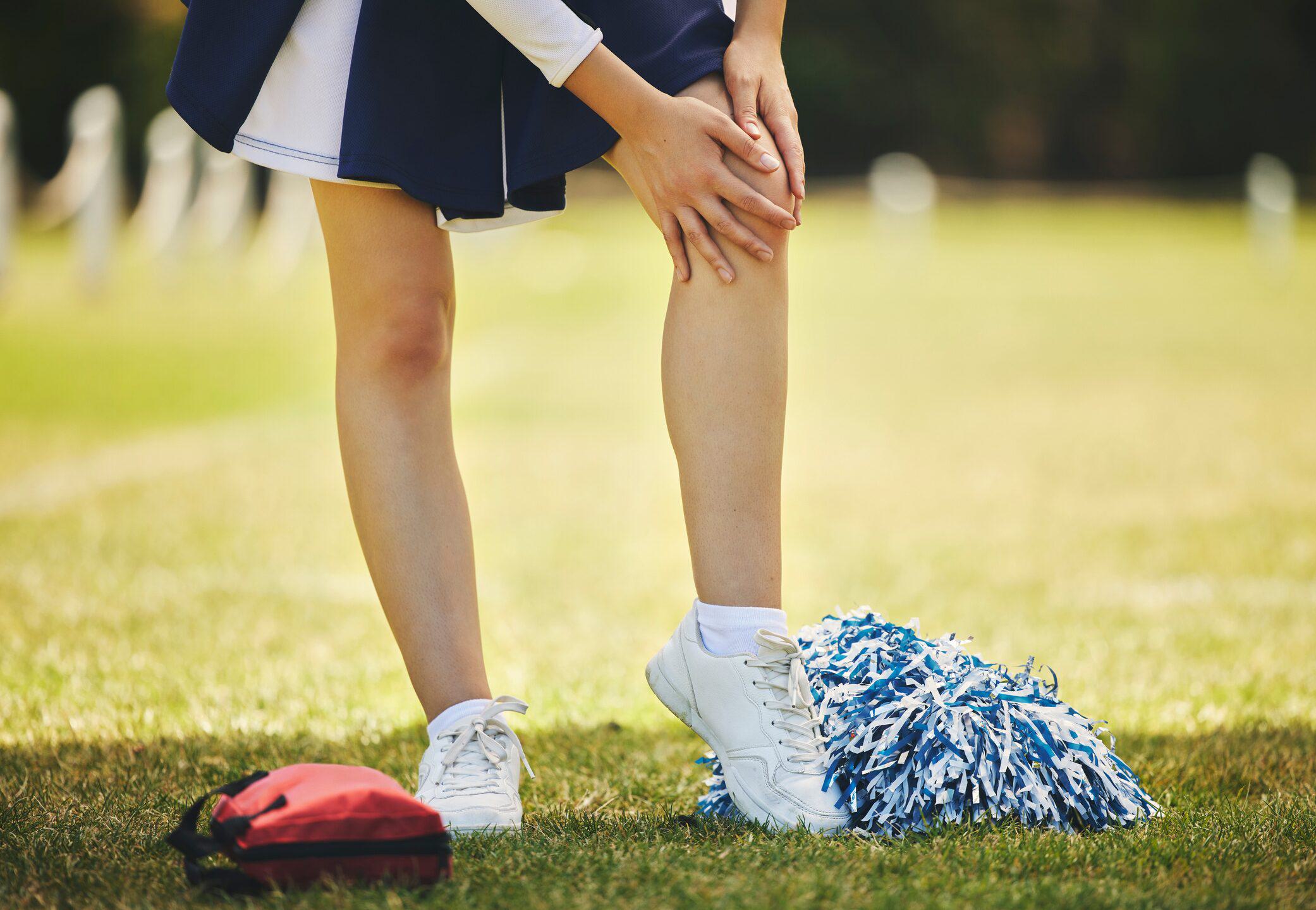
Epidemiology studies in cheerleading injuries estimate around 35,000 emergency room visits per year, the majority in females aged 12-18.5 Based on high school reporting, injury rates are higher in competitions (0.85/1000 athletic exposure, AE) than practices (0.76/1000 AE), and both are higher than performances/sideline events (0.49/1000 AE).6 Concussions are a risk for cheerleading athletes, especially with increasing skill requirements. Contact with another athlete or the floor are the most common mechanisms of injury, and prolonged return to competition is not uncommon. While the rate of concussions in cheerleading is low overall, the rate in competitive practices (2.51/10,000 AE) is third to only boys football and boys wrestling in high school athletes.6 Soft-padded “cheer helmets” and padded headbands are available and supported by biomechanical data, but clinical evidence is still lacking. Proper coaching of spacing, timing, and basing/support are critical to minimize concussion risk in these athletes.
The most common musculoskeletal injuries in cheerleading, in descending order, are the ankle, wrist/hand, back, and knee.7,8 Nearly two-thirds of cheer injuries evaluated in sports medicine clinics are due to overuse, most often presenting as Osgood-Schlatter disease, recurrent ankle sprains, spondylolisthesis, or patellofemoral pain.9 The most common acute injuries evaluated include soft tissue sprains and upper extremity fractures.3
Fortunately, catastrophic injury, defined as severe spinal or cerebral injury, is rare in cheerleading but accounts for over 50% of catastrophic injuries in female high school and collegiate athletes.10 The most common mechanism of these injuries is from falls during stunting. The basket toss (tossing a flyer into the air and catching them with multiple athletes with interlocked arms) was noted to be responsible for 21% of catastrophic injuries in these athletes.11 Banning the basket toss on hard surfaces led to a 74% reduction in catastrophic injuries over the course of a decade.12
Conclusion
Cheerleading is rising in popularity, with competitive cheer now being recognized as an Olympic sport, possibly leading to an Olympic debut in the near future. These athletes present with issues such as pressure for a quick return, concerns for decreased bone density, and injury patterns unique to these athletes. Sports medicine specialists should understand the terminology and expectations of the sport to help guide return to participation recommendations and injury prevention.
References
- Canty G, King J; COUNCIL ON SPORTS MEDICINE AND FITNESS. Safety in Cheerleading: Epidemiology and Recommendations: Policy Statement. Pediatrics. 2024;154(5):e2024068956.
- Sports and Fitness Industry Association. Single Sport Report – Cheerleading. 2022. https://sfia.org/resources/sfia-releases-single-sport-reports-for-team-racquet-and-action-sports/
- Xu AL, Beck JJ, Sweeney EA, Severson MN, Page AS, Lee RJ. Understanding the Cheerleader as an Orthopaedic Patient: An Evidence-Based Review of the Literature. Orthop J Sports Med. 2022;10(1):23259671211067222.
- Smith AB, Gay JL, Arent SM, Sarzynski MA, Emerson DM, Torres-McGehee TM. Examination of the Prevalence of Female Athlete Triad Components among Competitive Cheerleaders. Int J Environ Res Public Health. 2022;19(3):1375.
- Xu AL, Suresh KV, Lee RJ. Progress in Cheerleading Safety: Update on the Epidemiology of Cheerleading Injuries Presenting to US Emergency Departments, 2010-2019. Orthop J Sports Med. 2021;9(10):23259671211038895.
- Currie DW, Fields SK, Patterson MJ, Comstock RD. Cheerleading Injuries in United States High Schools. Pediatrics. 2016;137(1).
- Jacobson BH, Hubbard M, Redus B, Price S, Palmer T, Purdie R, Altena T. An assessment of high school cheerleading: injury distribution, frequency, and associated factors. J Orthop Sports Phys Ther. 2004;34(5):261-265.
- Jacobson BH, Redus B, Palmer T. An assessment of injuries in college cheerleading: distribution, frequency, and associated factors. Br J Sports Med. 2005;39(4):237-240.
- Stracciolini A, Casciano R, Friedman HL, Meehan WP 3rd, Micheli LJ. A closer look at overuse injuries in the pediatric athlete. Clin J Sport Med. 2015;25(1):30-35.
- Mueller FO. Cheerleading injuries and safety. J Athl Train. 2009;44(6):565-566.
- Boden BP, Tacchetti R, Mueller FO. Catastrophic cheerleading injuries. Am J Sports Med. 2003;31(6):881-888.
- Yau RK, Dennis SG, Boden BP, Cantu RC, Lord JA 3rd, Kucera KL. Catastrophic High School and Collegiate Cheerleading Injuries in the United States: An Examination of the 2006-2007 Basket Toss Rule Change. Sports Health. 2019;11(1):32-39.

