

Any guesses on the fastest growing high school sport in the United States?
While team sports hold immense popularity in the United States and around the world, both high school men’s (12.5% growth) and women’s (28.5% growth) wrestling participation increased at the fastest rates in the United States in 2024.1 Wrestling, often called “the oldest sport in the world,” is depicted in carvings and cave paintings from southern Europe dating back 15,000 to 20,000 years, with traces of the sport found throughout nearly every ancient civilization.2 Wrestling was the most popular, final, and decisive event in the pentathlon for the ancient Greek Olympics, with records of Olympic wrestling champions noted since 708 B.C.2 Modern wrestling and its rules developed in the late 19th century, with Greco-Roman wrestling being included in the first modern Olympic Games in Athens in 1896 followed by Freestyle wrestling that was added in 1904. Women’s freestyle wrestling competed for the first time in the 2004 Olympic Games.
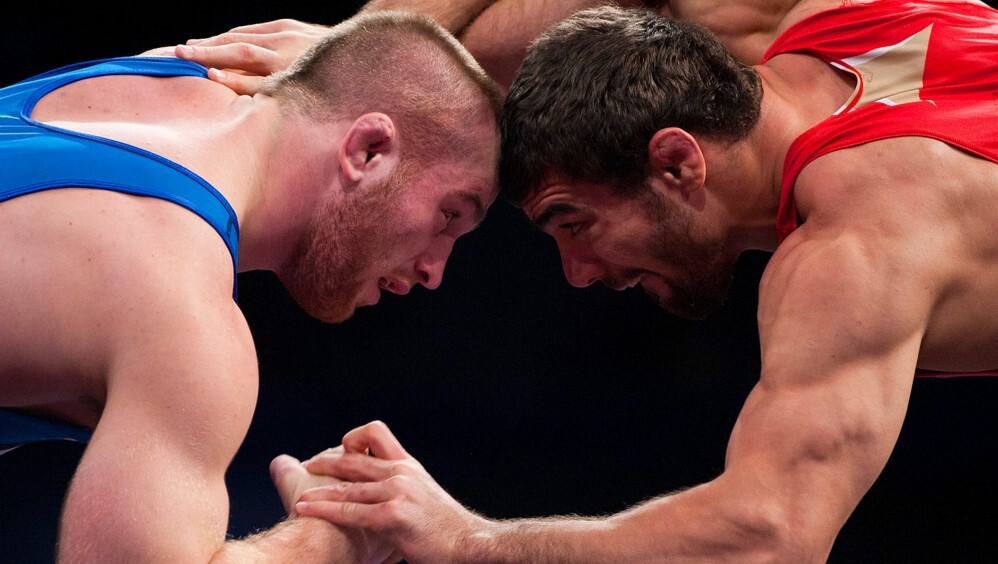
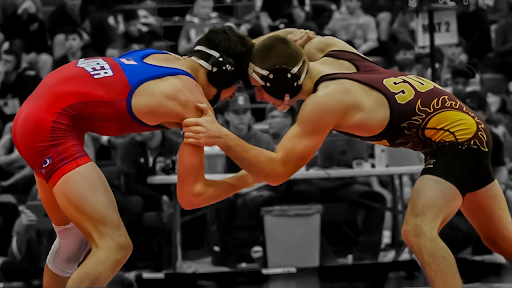
Competition breaks into 3 different forms: Greco-Roman, Freestyle, and Collegiate or Folkstyle wrestling. Each share a common goal to score points: gain control over your opponent, otherwise known as being in the “on top” position, and expose or turn your opponent’s shoulders to the mat. The most challenging and ideal way to win a match is to secure or pin an opponent’s shoulder to the mat, resulting in a “fall” and immediate victory ending the match. Greco-Roman wrestling does not allow wrestlers to grab or trip an opponent’s legs, favoring leverage and upper body control to throw an opponent to the mat. Freestyle and Collegiate wrestling resemble “catch-as-catch can” with no restrictions on attacking and gaining control over an opponent’s legs and body. Collegiate wrestling is most popular in the United States and is utilized only in scholastic and National Collegiate Athletic Association (NCAA) competition. Freestyle and Greco-Roman styles are the accepted forms for international competition. Scoring in wrestling is designed to favor offensive action, with higher points awarded for taking higher risk of “exposure” to the attacking wrestler.
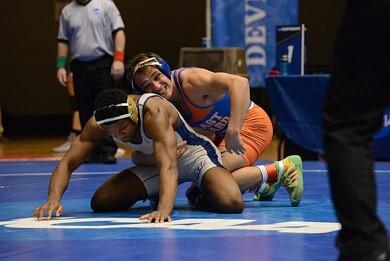 | 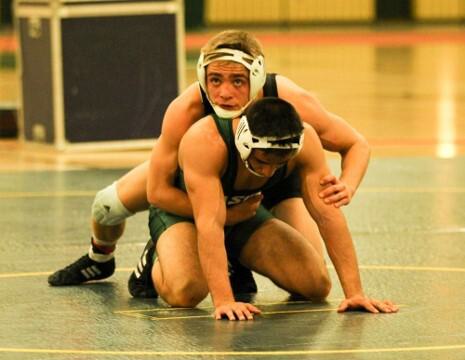 |
“Referee’s Position” Placing Athlete in “On-Top” and “On Bottom.”
Wrestling is recognized as one of, if not the “hardest sport” to compete in as an athlete.3 To wrestle, one must possess extremely high levels of endurance, strength, agility, and flexibility in addition to speed and power generation from every single body component that serves as a foundation to compete with and overpower an opponent. Well-renowned astrophysicist and former Harvard wrestling team captain Neil DeGrasse-Tyson occasionally shares his ‘yet-to-be-unproven’ hypothesis on social media that “if someone has wrestled and then tries any other sport or physical activity, their answer to the question of which is the hardest sport will always be wrestling.”4 Wrestlers are known to engage in intense physical training during practice and not infrequently reach extreme exhaustion by the end of a competition match. This intense training and competing often occurs in the setting of caloric deficit. Wrestlers compete in defined weight classes, and as such most wrestlers start preseason “cutting weight” to meet the perceived optimal weight class for competitive advantage. “Weigh-ins” occur every day preceding a match or competition; therefore, weight management is a required and regular component to a wrestler’s training and nutrition regimen. Wrestling training and competition require intense mental focus and discipline to maintain the ability to exert one’s will when placed in a compromised position or the inability to breathe normally, all while in a state of exhaustion and caloric deficit. All of this breeds an intense commitment and passion for those who compete and support the sport of wrestling and fosters a relentless will to win, but also at times can compromise the appropriate management of injury. For sports medicine professionals, wrestlers are an incredibly challenging group of athletes to care for, as wrestling has been acknowledged to have the highest rate of severe injury among all NCAA sports.5
Sports Medicine Issues
Weight Management
“Cutting weight” is an integrated part of training as a wrestler. Organizational regulations have been implemented in recent years to ensure athletes avoid risky or unhealthy practices that often were used in the past. In 1997, three collegiate wrestlers died within 35 days of each other as a result of intense training combined with efforts to cut weight in too short a period of time.6 NCAA rules now require all wrestlers “certify” their minimum wrestling weight (MWW) that is based upon an athlete’s starting weight, bodyfat percentage, and at adequate hydration levels as measured by specific gravity of urine < 1.020. Once a MWW is certified, a nutrition plan is developed to ensure no more than 1.5% of body weight is lost per week, based upon the understanding that a weight loss rate more rapid than this will result in muscle mass loss.7 Collegiate male wrestlers can drop no lower than 5% for bodyfat percentage. For high school athletes, male wrestlers body fat percentage cannot drop below 7% and female wrestlers are limited to no lower than 12%.8 These rules have helped shape the culture in wrestling around cutting weight to more safe and more healthier norms. It is advisable to involve a well-trained nutritionist in developing individualized plans for each wrestler who is cutting weight to both successfully meet weight-class goals but also to train wrestlers on appropriate healthy nutritional strategies to optimize their performance.
Skin Infections
Due to the nature of wrestling requiring skin-to-skin contact, infectious skin disease creates significant issues for wrestlers because their presence can disqualify an athlete from participation in competition and practice. The most common skin infections fall into three categories: fungal (ringworm; 22%), viral (Herpes gladiatorum; 45%), and bacterial (staphylococcus/impetigo; 25%).9 Wrestlers often undergo “skin checks” before competing, and if a suspicious skin lesion is found, they are disqualified until cleared or treated by a physician. For fungal infections, oral or topical antifungal medication must be used for 72 hours or 14 days if the lesion is on the scalp before an athlete can return to contact with other athletes. For bacterial infections, all lesions must be fully scabbed, with no drainage, no new lesions for 48 hours, and at least 72 hours of oral antibiotics before an athlete is considered “non-contagious.” For any Herpes lesions, all lesions must be scabbed, with no discharge for 48 hours, and athletes must complete the required course of oral antivirals for a minimum of 10 days for a first outbreak, 14 days if systemic symptoms are present, or 120 hours for recurrent outbreaks with no new lesions before returning to sport. The National Federation of State High School Associations (NFHS) and the NCAA utilize the same standard and have similar “skin forms” that are required to be completed by physicians before wrestlers can return to sport; these include diagnosis, date of initiation of treatment, and date of clearance for return to wrestling.10,11 For viral infections, data has demonstrated prophylactic daily use of 1 gram of oral valacyclovir can reduce the risk of individual outbreaks by 90% for athletes active in wrestling training and competition.12 Prophylactic valacyclovir should be considered for high risk individuals or populations with prior outbreaks or for athletes and programs where disqualification from an outbreak can have meaningful adverse consequences.
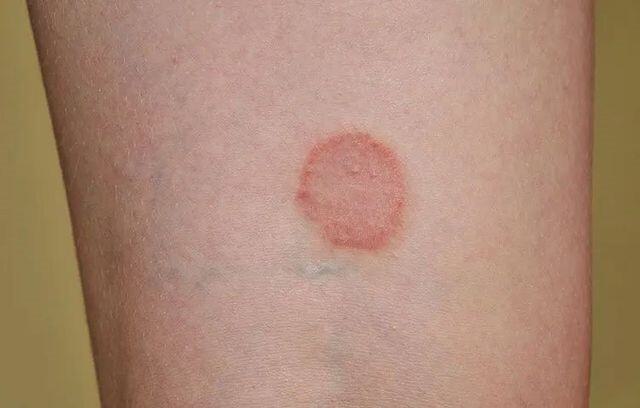 | 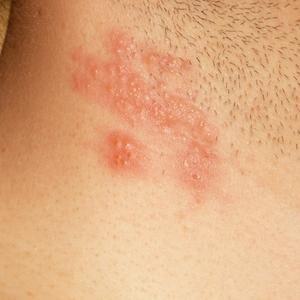 | 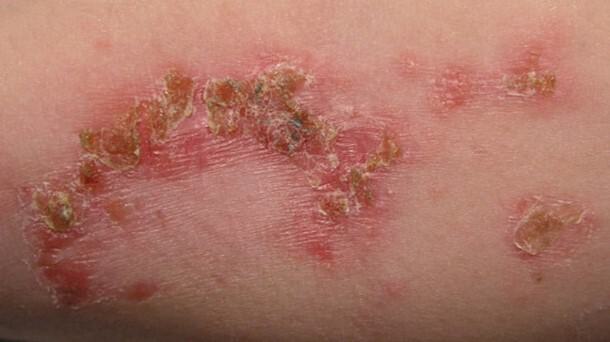 |
Different types of skin infections: ringworm (left), Herpes gladiatorum (middle), and impetigo (right).
Auricular Hematomas
Auricular hematomas are common in all combative sports, due to shearing of the small blood vessels that are torn between the skin and the cartilage of the pinna or outer ear. Treatment typically involves acute aspiration with an 18-gauge needle and application of a compression “dressing.” Small magnets are available that are easy to apply and have higher patient compliance than older traditional techniques of suturing a compression dressing to the affected area of the outer ear. Most wrestlers may resume training after 24 hours of treatment if they use headgear; however, compression over the affected area should continue for five to seven days. If left untreated, the hematoma can create necrosis of the underlying cartilage, which will heal with a thickened chondro-fibrotic tissue that deforms the pinna, also known as “cauliflower ear.” Some wrestler-athletes consider this a “badge of honor” and do not seek or want treatment. It is important to counsel athletes that the condition is often irreversible or can require reconstructive plastic surgery if left untreated but does not cause long-term harm other than cosmetic alteration or deformity.13
Knee Injuries
Knee injuries are reported to occur at the highest incidence of all injuries in collegiate wrestling, with incidence as high as 31% in practice and 40% in matches.9 The majority of knee injuries, however, can be treated with nonoperative treatment with relatively early return to sport. Most common knee injuries are low-grade isolated lateral collateral ligament (LCL) sprains followed by low-grade medial collateral ligament (MCL) sprains.14 Management typically includes six weeks of bracing, early weightbearing with range-of-motion exercises, and functional rehabilitation to guide the athlete back to sport. When competing, rules dictate braces must be covered and protected, but it should be recognized some wrestlers are reluctant to return to competition wearing a brace as it signals to their opponent a target to be exploited. In rare cases, an athlete may develop recurrent collateral ligament injury that precludes return to wrestling and may benefit from an isolated collateral ligament reconstruction.15 In the author’s experience, among more than 125 collegiate wrestlers treated over 11 years, only two athletes with isolated LCL sprains required surgical reconstruction after failing conservative management, with both athletes returning to full competition within six months.
Anterior cruciate ligament (ACL) tears occur at significantly less frequency compared to other injuries of the knee, with an incidence of 6% of all knee ligament injuries reported in collegiate wrestlers.16 Historically, hamstring or other non-patellar tendon grafts were preferred because the repeated anterior knee impact during a wrestler’s “shot” could irritate the patellar tendon harvest site and anterior scar. However, current data supports significantly lower retear rates with use of patellar tendon autograft (8% vs 21% for hamstring grafts), which has become standard of care for competitive wrestlers who in most cases are under the age of 25 years, another known risk factor for reinjury.17-19 While return to wresting after ACL reconstruction is reported at 80%, there are some cases or situations in which a wrestler may choose or attempt to finish a season or tournament before having reconstruction surgery.20 This decision requires six to 12 weeks of dedicated rehabilitation and proof of good function and stability in wrestling situations. If these efforts fail, reconstruction is indicated, with a strong likelihood of returning to wrestling following surgery.21
Meniscal injury occurs at a high rate in competitive wrestlers because the knee can get placed into compromising varus or valgus positions with rotational forces applied against resistance while defending against and performing takedowns.14,16 While most current data encourages aggressive surgical repair of meniscal tears in athletes, the approach to surgical repair of meniscal injury in wrestlers is much more nuanced; this is in part because retear of surgically repaired menisci is high and return to wrestling following repair is lower than other sports.22 In most cases, wrestlers will choose to undergo meniscal debridement as it allows a more reliable return to wrestling with a much shorter recovery time. At the author’s institution spanning 25 years and multiple team surgeons, the retear rate of meniscal repair for collegiate wrestlers was 100% by 12 months. Conversely, meniscal debridement resulted in 100% return to wrestling between two and six weeks following surgery. Our discussion with collegiate wrestlers presenting meniscal injury is that meniscal repair will lead to better long-term outcomes and health of their knee joint but only if they are willing to forego wrestling after surgery. In almost all cases, collegiate wrestlers choose meniscal debridement and early return to wrestling. The decision-making calculus is different though for high school or younger wrestlers and their parents as they weigh the short-term benefits of returning to wrestling vs the long-term health and longevity of the affected knee joint.
Shoulder Injuries
Shoulder injuries in collegiate wrestling are 10% of all injuries but also represent 23% of all injuries that end up requiring surgery.14 Injury rates for the upper extremity are highest in NCAA Division I wrestling compared to other collegiate divisions and high school wrestling. While severity of injury is highest when it occurs during competition, it has been reported 89% of upper extremity injuries were able to be managed nonoperatively, 73% of injuries required less than 14 days away from wrestling, and only 10% were season-ending injuries, with 6% of all upper extremity injuries eventually requiring surgery.23 That said, once a wrestler sustains a shoulder instability injury (labral and/or SLAP tear), recovery becomes extremely difficult. Wrestling demands constant force, leverage, and full-range shoulder strength, whether “hand fighting” in neutral position, applying pressure from the top, or resisting leverage from the bottom.
While surgical repair after a first-time dislocation is ideal for minimizing recurrence (up to 3.8 times risk reduction), the typical presentation for a wrestler seeking treatment occurs only after sustaining multiple dislocations to the point where their shoulder instability affects their ability to continue effectively competing as a wrestler.24 When a wrestler has an isolated SLAP or posterior tear, a trial of return to wrestling can be attempted; if successful, surgery is delayed indefinitely or until the season is completed. When surgery is indicated, there is some debate on whether arthroscopic soft-tissue repair is durable enough for successful return to wrestling. Despite no specific literature supporting bone-block surgery being superior for this cohort of athletes, some advocate for Bristow or Latarjet procedures for wrestlers regardless of bone loss or soft tissue status.25 Marigi and colleagues found a cohort of mixed high school (76%) and collegiate (20%) wrestlers undergoing shoulder stabilization surgery demonstrated an 85% returned to competitive sports while 55% returned to wrestling at the same level before injury; 85% were treated with arthroscopic surgery, 13% with open soft tissue repair, and only 3% with open bone augmentation surgery.24 Survivorship two years out from surgery remained high at 93%. These findings somewhat parallel the author’s experience, where decision-making on bony augment was based upon bone loss, soft tissue attrition, or in the setting of revision surgery. Applying this decision-making algorithm has allowed for a >90% return to a collegiate level of wrestling over an 11-year period, with one athlete choosing to retire for reasons other than his shoulder, and one athlete sustaining a postoperative subluxation event but was able to finish his wrestling career and transition to a military officer without recurrence or need for surgery. The author also has experience with one collegiate wrestler who underwent an open Latarjet (for glenoid bone loss) on one shoulder and arthroscopic stabilization on the other shoulder followed by three years of collegiate wrestling and completion of his wrestling career. He sustained no recurrent instability events but had much better satisfaction and lower pain scores with the arthroscopically stabilized shoulder compared to his open Latarjet shoulder after his wrestling career was completed. These experiences highlight that an appropriately indicated and well-performed arthroscopic stabilization procedure can lead to successful return to sports with low risk of recurrence for high-level wrestlers.
Elbow Injuries
Elbow injuries occur at a slightly higher rate than shoulder injuries in wrestling.23 The most common injuries are hyperextensions/valgus injuries that can lead to a ulnar collateral ligament (UCL) sprain, and posterolateral elbow dislocations, most of which occur with a forceful return to the mat with the wrestler’s arm “posted” in a fully extended or hyper-extended position. Elbow dislocations should be managed urgently with immediate reduction in the adjacent training room. The “modified Stimson” or “Parvin” technique is recommended, which involve lying the patient prone on a high table with the shoulder abducted and the forearm hanging over the edge of the table. With the elbow in 90 degrees of flexion, gentle medial pressure is applied to the olecranon (for a posterolateral dislocation) followed by a “push” in the distal direction, often resulting in a palpable and audible ‘clunk’ and resolution of deformity. Pre- and post-reduction vascular status should be assessed, and post-reduction radiographs obtained to confirm reduction.21,26
After elbow reduction or hyperextension/UCL sprain, nonoperative treatment is generally successful despite findings of “complete UCL disruption” on imaging.21 The challenge after elbow dislocation is stiffness not instability. Hinged bracing of the elbow is implemented for up to 6 weeks and early range of motion is initiated. Once pain-free range of motion and functional strength is restored, the wrestler can return to the mat, typically six to eight weeks from injury. Bracing while wrestling is recommended for 12 weeks following injury. This same protocol can be utilized for high-grade UCL sprains. UCL reconstruction or repair is generally avoided because return to wrestling after surgery is uncertain, whereas nonoperative treatment offers a much more reliable return and in less than half the time required for postoperative rehabilitation and restrictions.21,27,28 There is some evidence that use of PRP may help with return to sport for nonoperative management of UCL sprains, and the author has successfully used a three-injection leukocyte-poor platelet-rich plasma protocol for wrestlers with post-injury residual pain following a UCL sprain resulting in resolution of pain while wrestling.29
Conclusion
Wrestling as the “original sport” continues to be a popular athletic endeavor with a passionate and dedicated body of athletes willing to endure intense training and deprivation to “have their hand raised” and succeed at their chosen sport. Wrestling creates unique challenges for sports medicine professionals to keep wrestling athletes healthy, optimized, and able to return to sport following injury. Modifications to standard sports medicine treatment strategies need to be recognized and applied to provide appropriate and best outcomes for wrestling athletes. For sports medicine professionals who share a passion for the sport of wrestling, further efforts to evaluate and collect data on treatment strategies, risk mitigation, and performance optimization are necessary to improve recommendations and treatment options available to this group of highly dedicated and committed athletes.
Col. R. Judd Robins, MD, is Chief of Orthopaedic Surgery and Head Team Physician at the US Air Force Academy and Associate Professor of Surgery at Uniformed Services University.
References
1. Clark J. Wrestling is America's Fasting Growing Boy and Girls High School Sport: US Wrestling Foundation; 2024. Accessed September 25, 2025. https://uswrestlingfoundation.org/wrestling-is-americas-fastest-growing-boys-and-girls-high-school-sport/
2. Dellinger B. The Oldest Sport Waterloo, Iowa: National Wrestling Hall of Fame Dan Gable Museum; 2025. Accessed September, 2025. https://nwhof.org/national-wrestling-hall-of-fame/pages/the-oldest-sport#:~:text=Wrestling%2C%20mankind's%20oldest%20and%20most%20basic%20form,illustrate%20wrestlers%20in%20hold%20and%20leverage%20positions
3. Martin WR, Margherita AJ. Wrestling. Phys Med Rehabil Clin N Am. 1999;10(1):117-140, vii.
4. Minion C. MMI #11: Neil deGrasse Tyson [Internet]; 2020. Accessed September 25, 2025 [cited October 4, 2025]. Podcast. https://www.youtube.com/watch?v=Rq9rw7dVpSs
5. Kay MC, Register-Mihalik JK, Gray AD, Djoko A, Dompier TP, Kerr ZY. The Epidemiology of Severe Injuries Sustained by National Collegiate Athletic Association Student-Athletes, 2009-2010 Through 2014-2015. J Athl Train. 2017;52(2):117-128.
6. Hyperthermia and dehydration-related deaths associated with intentional rapid weight loss in three collegiate wrestlers--North Carolina, Wisconsin, and Michigan, November-December 1997. MMWR Morb Mortal Wkly Rep. 1998;47(6):105-108.
7. Gibbs AE, Pickerman J, Sekiya JK. Weight management in amateur wrestling. Sports Health. 2009;1(3):227-230.
8. Funk A. Wrestling with regulations. Training & Conditioning. 2006;16(2).
9. Agel J, Ransone J, Dick R, Oppliger R, Marshall SW. Descriptive epidemiology of collegiate men's wrestling injuries: National Collegiate Athletic Association Injury Surveillance System, 1988-1989 through 2003-2004. J Athl Train. 2007;42(2):303-310.
10. NFHS MEDICAL RELEASE FORM FOR WRESTLER TO PARTICIPATE WITH SKIN LESION(S) National Association of State High School State Associations; 2015. Accessed September 25, 2025. https://assets.nfhs.org/umbraco/media/869160/2015-16-nfhs-wrestling-skin-lesion-form-april-2015-final.pdf
11. Wrestling Skin Evaluation and Participation Status Form: National Collegiate Athletic Association. Accessed September 25, 2025. https://ncaaorg.s3.amazonaws.c...
12. Anderson BJ, McGuire DP, Reed M, Foster M, Ortiz D. Prophylactic Valacyclovir to Prevent Outbreaks of Primary Herpes Gladiatorum at a 28-Day Wrestling Camp: A 10-Year Review. Clin J Sport Med. 2016;26(4):272-278.
13. Greywoode JD, Pribitkin EA, Krein H. Management of auricular hematoma and the cauliflower ear. Facial Plast Surg. 2010;26(6):451-455.
14. Otero JE, Graves CM, Bollier MJ. Injuries in Collegiate Wrestlers at an Elite Division I NCAA Wrestling Program: An Epidemiological Study. Iowa Orthop J. 2017;37:65-70.
15. Coobs BR, LaPrade RF, Griffith CJ, Nelson BJ. Biomechanical analysis of an isolated fibular (lateral) collateral ligament reconstruction using an autogenous semitendinosus graft. Am J Sports Med. 2007;35(9):1521-1527.
16. Ford K, Schaver AL, Leary S, Keith JN, Westermann RW. Return to Sport After Knee Injuries in Collegiate Wrestling. Iowa Orthop J. 2023;43(1):131-135.
17. Marigi EM, Song BM, Wasserburger JN, Camp CL, Levy BA, Stuart MJ, et al. Anterior Cruciate Ligament Reconstruction in 107 Competitive Wrestlers: Outcomes, Reoperations, and Return to Play at 6-Year Follow-up. Orthop J Sports Med. 2022;10(5):23259671221092770.
18. Maletis GB, Inacio MC, Funahashi TT. Analysis of 16,192 anterior cruciate ligament reconstructions from a community-based registry. Am J Sports Med. 2013;41(9):2090-2098.
19. Hacken BA, Keyt LK, Leland DP, LaPrade MD, Camp CL, Levy BA, et al. A Novel Scoring Instrument to Assess Donor Site Morbidity After Anterior Cruciate Ligament Reconstruction With a Patellar Tendon Autograft at 2-Year Follow-up Using Contemporary Graft-Harvesting Techniques. Orthop J Sports Med. 2020;8(6):2325967120925482.
20. Lightfoot AJ, McKinley T, Doyle M, Amendola A. ACL tears in collegiate wrestlers: report of six cases in one season. Iowa Orthop J. 2005;25:145-148.
21. Riccio I, Tarulli FR, Maffulli N, Neyret P, Hutchinson MR, Espregueira-Mendes J, et al. Sports Specific-Related Injuries. Switzerland. 2021.
22. Marigi EM, Keyt LK, LaPrade MD, Camp CL, Levy BA, Dahm DL, et al. Surgical Treatment of Isolated Meniscal Tears in Competitive Male Wrestlers: Reoperations, Outcomes, and Return to Sport. Orthop J Sports Med. 2021;9(1):2325967120969220.
23. Goodman AD, Twomey-Kozak J, DeFroda SF, Owens BD. Epidemiology of shoulder and elbow injuries in National Collegiate Athletic Association wrestlers, 2009-2010 through 2013-2014. Phys Sportsmed. 2018;46(3):361-366.
24. Marigi EM, Lamba A, Boos A, Wang A, Okoroha KR, Barlow JD, et al. Outcomes of Shoulder Instability Surgery in Competitive Wrestlers: Outcomes, Reoperations, and Return to Play at 5 Years' Mean Follow-up. Am J Sports Med. 2024;52(3):586-593.
25. Lawhorn KW. Editorial Commentary: Both Bristow and Latarjet Procedures Result in Low Rates of Recurrent Shoulder Instability Despite Potential for Bone Resorption and Lack of Graft Healing. Arthroscopy. 2023;39(12):2434-2437.
26. Gottlieb M, Schiebout J. Elbow Dislocations in the Emergency Department: A Review of Reduction Techniques. J Emerg Med. 2018;54(6):849-854.
27. Ramos N, Limpisvasti O. UCL Injury in the Non-throwing Athlete. Curr Rev Musculoskelet Med. 2019;12(4):527-533.
28. Gopinatth V, Batra AK, Khan ZA, Jackson GR, Jawanda HS, Mameri ES, et al. Return to Sport After Nonoperative Management of Elbow Ulnar Collateral Ligament Injuries: A Systematic Review and Meta-analysis. Am J Sports Med. 2023;51(14):3858-3869.
29. Mills FBt, Misra AK, Goyeneche N, Hackel JG, Andrews JR, Joyner PW. Return to Play After Platelet-Rich Plasma Injection for Elbow UCL Injury: Outcomes Based on Injury Severity. Orthop J Sports Med. 2021;9(3):2325967121991135.

