
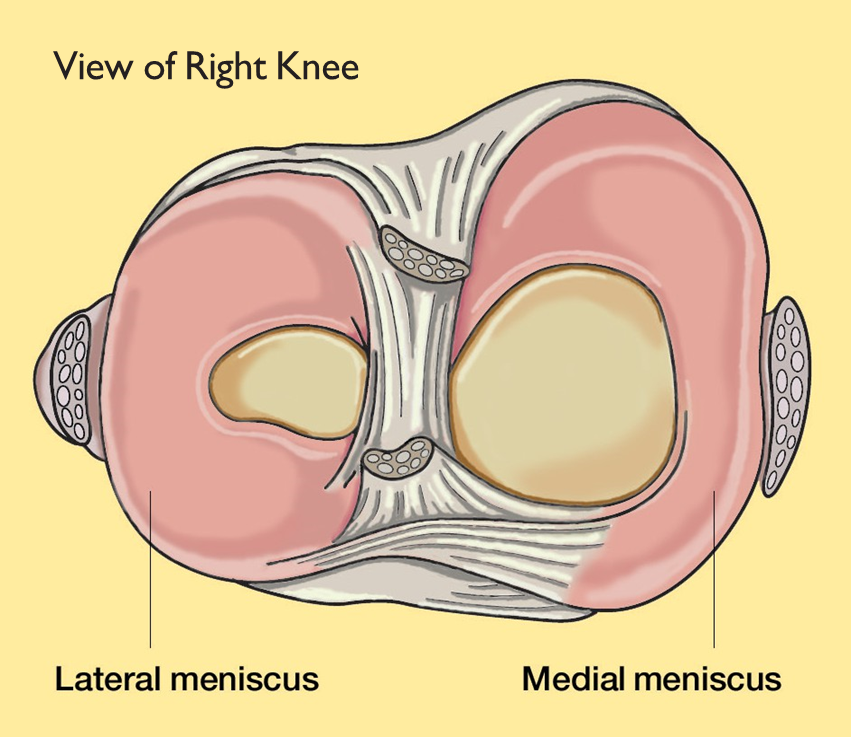
The meniscus is a C-shaped fibrocartilaginous tissue that sits between the femur and tibia bones on the inner and outer parts of your knee. The two knee menisci act as cushions or shock absorbers, shielding load from the smooth cartilage surfaces lining the bones. They also work together with the knee ligaments to stabilize the knee.
How is the meniscus torn or injured?
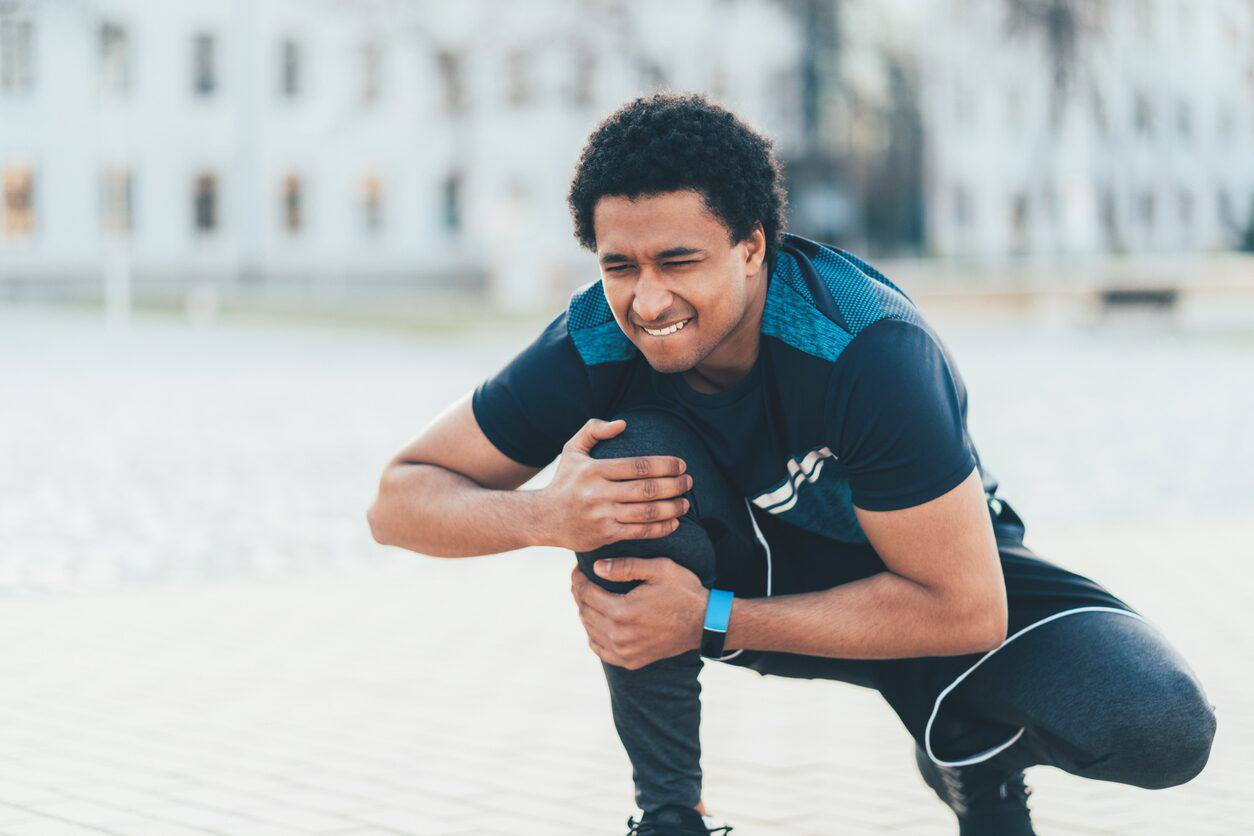
Traumatic injuries may result in meniscus tears in young athletes. Twisting, pivoting, and forceful compressive maneuvers may cause a tear. It is also common for the meniscus to be injured along with other major knee ligaments such as the ACL.
In older athletes, the meniscus may tear with much less force during routine activities such as repetitive running or squatting. In these cases, the meniscus has been weakened through the degenerative aging process, making it vulnerable to tearing with even low energy maneuvers. These degenerative type tears are often seen in conjunction with osteoarthritis in this patient group.
How is a meniscal tear diagnosed?
Following injury, traumatic meniscus tears often cause acute pain on one side of the joint, swelling, and mechanical symptoms such as catching or locking. Patients will report difficulty with squatting and avoidance of twisting activities. Degenerative meniscal tears may be asymptomatic or have more subtle findings often related to their underlying osteoarthritis (i.e., stiffness, pain with sit to stand). A good history and physical examination will provide the physician with a high index of suspicion that a meniscus tear has occurred. Advanced imaging studies such as MRI (magnetic resonance imaging) can be helpful to confirm the diagnosis and to help plan for non-surgical versus surgical treatment.
How is a meniscal tear treated?
The majority of traumatic meniscal tears in young athletes should be treated with attempted surgical repair. This is typically performed with arthroscopic and/or mini-open surgical techniques. Meniscus healing depends on many factors including patient age, tear type, tissue quality and mobility, proximity to the surrounding blood supply, patient factors (e.g., age, BMI) , and presence of other injuries (e.g., ACL). Discussion with your surgeon will focus on the healing rates for your specific tear pattern and the risks of recurrent tear following treatment.
In rare cases where the meniscus is noted to be functionally deficient following injury or surgery in the young active patient, salvage treatment options such as meniscus substitution (e.g., CMI) or meniscus allograft transplantation may be indicated. These procedures have the primary goal of joint preservation and improvement in patient quality of life, with less focus on return to sport.
In older patients, degenerative meniscus tears may be asymptomatic and require either no treatment or non-operative treatment for the underlying osteoarthritis. Some degenerative tears cause mechanical symptoms or do not improve despite conservative treatment. These tears may require arthroscopic treatment. The majority of these tears are not repairable and are treated with partial meniscectomy, removing only the damaged portion of the meniscus. While the relative risk of arthritis progression goes up after this procedure, most patients are satisfied with decreased pain and improved function following surgery.
Reviewed September 2025 by Andrew Bi, MD
STOP Sports Injury tip sheets are brought to you by the American Orthopaedic Society for Sports Medicine. They provide general information only and are not a substitute for your own good judgment or consultation with a physician.
For more tip sheets and to find an expert near you, visit sportsmed.org/STOP
Copyright ©2025. American Orthopaedic Society for Sports Medicine. All rights reserved
References
Knapik DM, Smith MV, Matava MJ, Brophy RH. Surgical Management of Meniscus Tears: Update on Indications and Techniques for Repair. J Am Acad Orthop Surg. 2025 Jan 28;33(13):711-719. doi: 10.5435/JAAOS-D-24-01219. PMID: 39874160.
Stannard JP, Sherman SL, Cook JL. Soft tissue injuries about the knee.
OKU-12, 2017.
Sherman SL, Raphael B, Rodeo SA. Meniscus Injury. Musculoskeletal Examination of the Hip and Knee: Making the Complex Simple. Ranawat A, Kelly B, eds. SLACK inc. 2011.