
Plantar fasciitis is inflammation of the plantar fascia, which is flat band of connective tissue that runs from the base of the heel bone towards the toes and provides stability for the sole of the foot. The most common symptom of plantar fasciitis is pain felt at the bottom of the heel. It is usually felt on the first step out of bed in the morning or when walking again after resting from a walking or running activity. However, plantar fasciitis pain can, if it persists, soon be felt any time you are walking, running or jumping.
Although the pain is mostly felt at the bottom of the heel, it can also radiate down the entire bottom of the foot toward the toes. Plantar fasciitis is not usually associated with numbness or tingling.
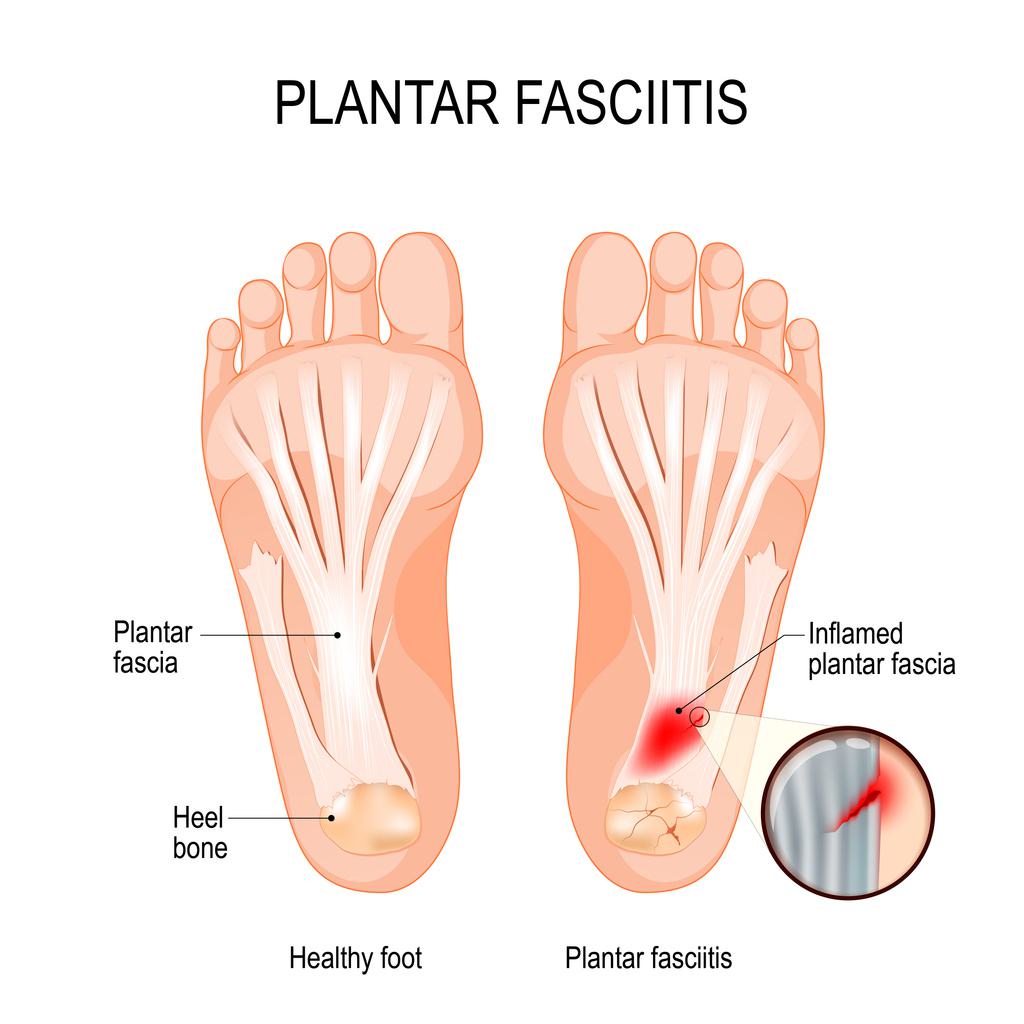
Anatomy of the Plantar Fascia
The plantar fascia consists of dense bands of tissue deep below the skin that extend out in a fan-like fashion from the heel bone to the toes. If you pull your toes and foot toward your head, you will feel this tissue tighten.
What causes plantar fasciitis?
Plantar fasciitis is thought to be caused by repetitive stretching of the tight bands of the plantar fascia which result in microtears in these bands as they extend from the heel. Because these tears usually do not occur from a single traumatic event, an immediate healing reaction is not triggered. A chronic irritation or inflammation process thereby begins which increases with activity. A sudden weight gain may also increase stress to an otherwise normal plantar fascia.
Pulling of the tight plantar fascia on the heel bone during activity can result in the formation of a bone spur off the tip of the heel bone, at the origin of the plantar fascia tissue. This bone spur itself is not the cause of pain, but rather the mechanical result of the chronic inflammatory process on the bone caused by the stretching of the tight tissue.
Treatment Tips
Surgery is rarely necessary to treat plantar fasciitis. To decrease pain and symptoms:
- Tape the heel and arch. Custom shoe inserts may be needed to support the arch and the heel.
- Increase the flexibility of the plantar fascia and calf muscles by doing stretching exercises. Tight calf muscles increase the stress on the plantar fascia and predispose you to plantar fasciitis.
- Massage the plantar fascia by rolling your foot over a round tube-like object with a diameter of 3 to 4 inches. A rolling pin works nicely for this.
- Strengthen the muscles of the foot and ankle that support the arch. One way to do this is to scrunch up a hand towel with your toes or use your toes to pull a towel weighted with a food can across the floor.
- Warm up well before stretching. Cold tissues cannot stretch as effectively, so a good time to stretch is after riding a stationary bike for 5 to 10 minutes, after a hot shower, or at the end of workouts.
- Use ice to promote healing and improve pain. After stretching sessions, and multiple times during the day, ice your heel for 20 to 30 minutes at the point of maximum tenderness to decrease any inflammation that can sometimes be felt after vigorous workouts or a day full of prolonged walking or standing activities.
- Consider the use of oral anti-inflammatory medications such as aspirin or naprosyn or ibuprofen. These medications can decrease the inflammation of the plantar fascia and thus decrease your symptoms so that you can stretch and improve your flexibility. In some cases, your physician may recommend a prescription anti-inflammatory for you.
- Try a night splint. These devices, prescribed by your physician, keep the foot flexed at 90 degrees instead of the typical relaxed foot position of toes pointed down that occurs during sleep. Wearing a splint may lessen the pain of the first step in the morning.
- Massage the heel with a sports cream, which may lessen symptoms. A variety of “hands on” therapeutic treatments can also be administered by a physical therapist.
Preventing Plantar Fasciitis
- Always warm up well and stretch before participating in sports.
- Wear good, supportive shoes for athletic activities.
- Keep foot and ankle muscles strong to support the arch.
- Don’t try running to lose weight after a rapid weight gain. Walk first, and stretch the muscles of the foot and calf to help condition the body before running. Avoid activities that cause heel pain.
- See a physician if pain persists despite these measures.
Reviewed November 2025 by Will Johns, MD
Contributing Expert: Wayne J. Sebastianelli, MD
Sports Tips are brought to you by the American Orthopaedic Society for Sports Medicine. They provide general information only and are not a substitute for your own good judgment or consultation with a physician.
For more tip sheets and to find an expert near you, visit sportsmed.org/STOP
Copyright ©2025. American Orthopaedic Society for Sports Medicine. All rights reserved.