
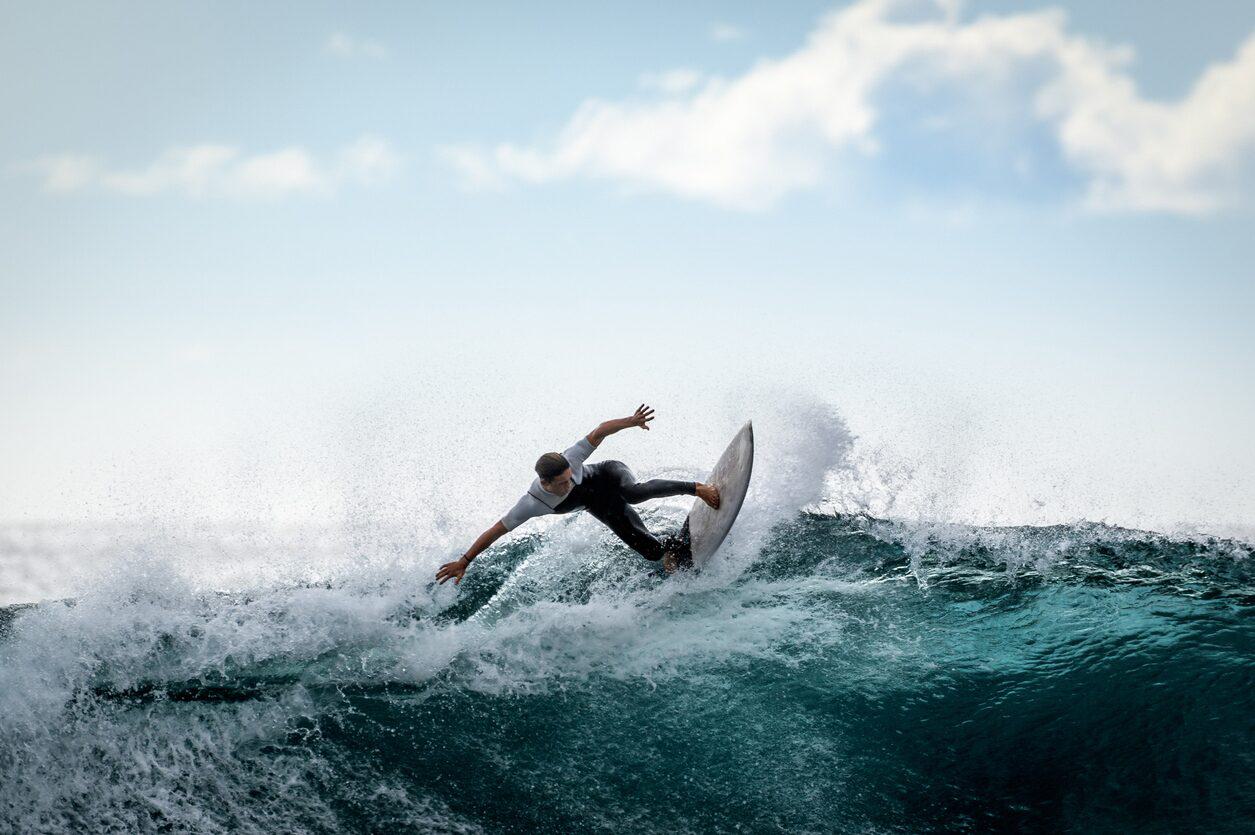
The ever growing sport of surfing not only places a unique physical stress on the body but also exposes the athlete to the forces of mother nature. While surfing is a fantastic and safe sport to keep the body and mind active, injuries do occur. In fact, many of these injuries can be preventable. They often occur due to improper preparation, inexperience with varied conditions, and/or poor judgment. With proper physical preparation, suitable equipment, and common sense you can avoid many of these injuries while having an exceptional day in the lineup.
What causes surfing injuries?
Most surfing injuries can be described as acute or chronic in nature. Chronic injuries are often due to overuse and poor paddling/riding technique. Acute injuries typically occur from a traumatic event. The most common issues that place athletes at a higher risk are the following:
- Time surfing/paddling without rest
- Attempting to catch waves above ability level
- Improper equipment
- Poor swimmer
- Dehydration/poor sun protection
- Surfing alone
- Surfing in unfamiliar conditions/location
- Unaware of dangerous local marine life activity
- Unfamiliar with local surf break hazards
- Not adhering to local conduct code
What are the most common surfing injuries?
- Lacerations, aka “reef rash”
- Shoulder dislocations/fractures, rotator cuff injury
- Lower back pain
- Ankle/foot sprains/fractures
- Blunt chest/abdominal trauma
- Spine injuries
- Drowning
- Head injuries/concussions
- Blunt chest abdominal trauma
- “Surfer’s ear”—ruptured ear drums, ear infections, closing off of ear canal
- Injuries sustained from marine wildlife
How are surfing injuries treated?
The vast majority of injuries are minor in nature and can be treated with rest, bracing, over the counter nonsteroidal anti-inflammatory medication, and physical therapy. However, sometimes injuries require small procedures or even surgery. The recovery from most surgeries can take 6 to 9 months.
How can you prevent surfing related injuries?
Proper equipment
Surfboard: Beginners and poorly conditioned athletes should attempt to ride boards of larger volume such as a long or fun shaped board. These boards prove to be more buoyant and require less work to paddle. This will prevent fatigue related injuries
Wetsuit/sun protection: Wetsuits, hoods, gloves, and booties are required to prevent cold exposure injuries such as frostbite. Below 50°F, surfers should consider covering their nose, lips, and cheeks with Vaseline. The proper equipment depends on the water temperature. Below is a reliable chart reviewing the proper cold protection pending water temperature:
| Temperature | Wetsuit |
| 80 to 74 degrees | Rash guard |
| 73 to 66 degrees | 2 mm Neoprene top or springsuit |
| 65 to 58 degrees | 2 mm long sleeve springsuit or 3/2 full suit 58 to 55 degrees 3/2 mm full suit + booties |
| 58 to 55 degrees | 3/2 mm full suit + booties |
| 54 to 49 degrees | 4/3 mm full suit + booties + gloves |
| 49 to 42 degrees | 5/4 mm full suit + booties + gloves + hood |
| 42 degrees and below | 6/5 mm full suit + booties + gloves + hood |
Regarding sun exposure, skin coverage with rash guard is a reliable way of preventing sun damage, skin cancer, and dehydration. In addition, sun screen/block should be applied every 2 hours to exposed skin. It is recommended that contain both zinc and titanium with a sun protective factor (SPF) of 30.
Leash: The surfboard leash is a rope that attaches to the surfer’s back leg. This provides athletes a form of security as it will provide a way for them to obtain their surfboard efficiently so they can paddle away from the breaking surf. However, the leash has to be long enough to allow the surfboard to travel away from the athlete during a wipeout. This will prevent surfboard impact injuries, which are the most common cause of blunt trauma in the sport. Leashes should be at least as long as the surfboard.
Ear plugs: Ear injuries are very unique injuries in the surfing community. Ear plugs can potentially prevent infections, ruptures, and ear canal narrowing that can occur from repeated wipeouts and cold water exposure.
Understanding Conditions/Surroundings
Understanding Conditions: You should try to check weather, currents, tides, and swell directions in breaks that you are not familiar with. It is always a good idea to ask locals and water patrol if you have any questions about unfamiliar breaks. With this information you can figure out an efficient way to get out to the break to prevent fatigue injuries or even drownings. This is a great opportunity to learn about local water hazards such as rocks, reefs, or jetties that are found near the surf that can cause high energy injuries.
Understanding local marine wildlife and pollution: However rare, injuries from sharks, jellyfish, stingrays, crocodiles, and sea snakes do occur. Avoiding the water during certain migrating patterns and activity is encouraged. In addition, some breaks do occur in polluted water and should be avoided to prevent systemic illness.
Understanding local conduct code: Often times there is an organized line up in the water. This allows for everyone to have a turn to catch a wave in a safe manner. Traditionally the surfer who is catching the wave closer to the inside of the break has the
right of way. The individual who is attempting to catch the break in front of him/her should pull out to prevent a collision. In a similar fashion, wave riders have the right of way over paddlers. Paddlers should attempt to paddle away or duck dive to avoid collision. Not adhering to these conduct code can lead to injuries as well verbal/ physical confrontations with other surfers.
Parental Oversight
Parents play an essential role in educating their children about being safe in the water. They should have their children avoid large surf or conditions that are beyond their ability level. The athlete’s swimming ability and comfort in the water should be accessed to prevent drowning. In addition, they should encourage routine rest breaks with rehydration. In addition, teaching proper paddling techniques will help prevent fatigue.
Use of Common Sense
Every surfer in the world has seen a wave that is too big for them to safely catch. These waves can by 3 feet or 30 feet high. The key is knowing your limits to stay safe and have fun.
Expert Consultants: Ian M. Alkhafaji, MD, Kevyn Dean, MSPT, OCS
Reviewed October 2025 by Emily Whicker, MD
Expert Consultants: Ian M. Alkhafaji, MD, Kevyn Dean, MSPT, OCS
Sports Tips are brought to you by the American Orthopaedic Society for Sports Medicine. They provide general information only and are not a substitute for your own good judgment or consultation with a physician.
For more tip sheets and to find an expert near you, visit sportsmed.org/STOP
Copyright ©2025. American Orthopaedic Society for Sports Medicine. All rights reserved.