
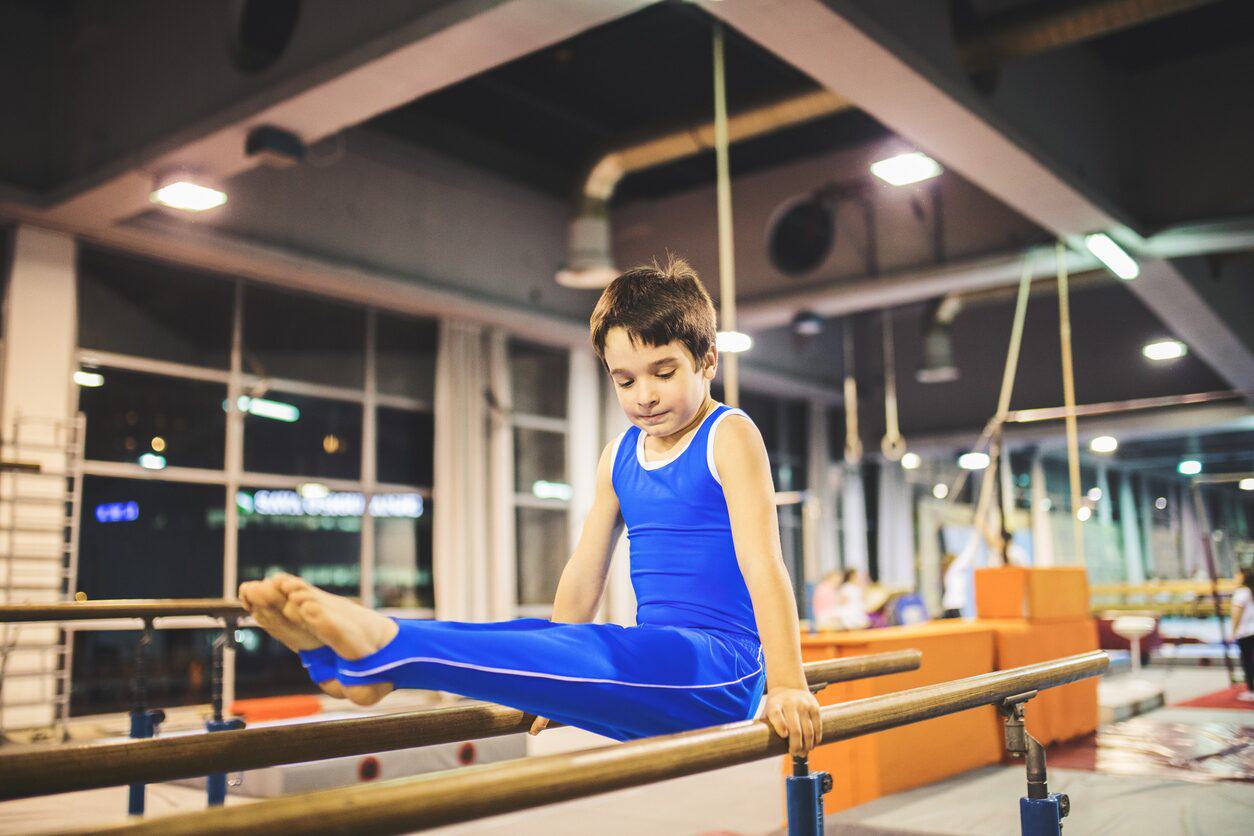
The intensity and duration of training often required in youth sports today is associated with an increased risk and severity of overuse injury to young athletes. Overuse injuries of the primary physes (growth plates) in the extremities are of particular concern given their potential for growth disturbance. The primary physes or growth plates are located at the end of long bones (i.e., the shin bone and forearm bones). Because overuse injuries may involve one or more parts of the epiphyseal-physeal- metaphyseal (EPM) complex, these injuries are collectively referred to as primary periphyseal stress injuries (PPSIs). The purpose of this tip sheet is to discuss the nature, treatment, and prevention of PPSIs in young athletes.
What is the epiphyseal-physeal-metaphyseal (EPM) complex?
The EPM complex is located at each end of long bones and consists of the epiphysis, physis, and metaphysis (Figure 1).
The epiphysis is the end part of a long bone, at its joint with adjacent bones. The metaphysis is the area that transitions between the end of the bone and the shaft. The primary physis (growth plate) is located between the epiphysis and metaphysis and is what provides for growth in length. Bone growth and response to injury are dependent on blood flow to the EPM complex. Rates of growth vary with age and among individual bones.
Why is the physis (growth plate) vulnerable to injury?
The growth plate is made of cartilage and is the last portion of bone to ossify or harden into solid bone. It can be 2–5 times weaker than other structures (ligaments and tendons) around the end of the bone and joint. Therefore, it is more likely to be injured compared to the other structures such as the bone and ligaments. Later maturing children may experience a lengthened time at risk of PPSI since their period of growth is prolonged.
Overuse injury involving the EPM complex
Physical activity is necessary to support normal bone growth. However, increases in physical load over time, beyond the body’s ability to adapt, may cause a PPSI. Overuse injuries may involve one or more parts of the EPM complex. PPSIs may cause injury to the blood supply of the EPM complex. As a result, the bone cells continue to increase in number and size but are not able to turn into mature bone. This causes a widening of the growth plate which can be seen on X-rays. These injuries generally resolve with rest and usually do not produce growth consequences. However, in rare cases the injury may lead to a deformity or growth disruption often due to an absence or delay in getting treatment.
The growth plates most at risk for a stress-related injury are the ones most loaded during repetitive activity. For example, a gymnast may repetitively bear weight on the wrist bone while performing floor routines and vaulting or a young football place kicker may repetitively stress the distal femur (bone above the knee) (Figure 2). The repetitive loading forces may include one or more of compressive, rotational, traction, tension, or shearing forces.
Who is at risk for PPSIs?
As more youth participate year-round in sports, particularly with intense training regimens, more PPSIs are occurring. Kids who participate in sports at advanced levels of training and competition—for example in baseball, gymnastics, and rock
climbing—are characterized by an increased risk of PPSIs. Many sports medicine specialists believe that early sport specialization and over-training contribute to increased risk of this injury.
However, non-elite young athletes are not spared from these injuries. The risk of PPSIs among all young athletes are believed to be especially pronounced during periods of rapid growth.
Which body regions are PPSIs most likely to occur?
Reports of PPSIs feature a variety of locations including the shoulder, elbow, wrist, hand, fingers, hip, knee, ankle, and feet. The proximal humerus (shoulder), distal radius (wrist), distal femur (above the knee), and proximal tibia (below the knee) are the most frequently reported locations. Youth baseball pitchers were the
first young athletes recognized to present with these injuries in the 1950s in the proximal humerus (shoulder). Since then, reports of PPSIs are associated with a growing number of sports including:
|
|
Most concerning in recent years, are the growing number of reports of PPSIs affecting the lower extremities of young athletes, including those which proceed to growth disturbance.
What are the signs and symptoms of PPSIs?
PPSIs must always be considered in young athletes experiencing chronic pain during sports activities in the region of a primary physis— especially in adolescents experiencing rapid growth. Examples of common symptoms include:
- Pain and tenderness at the end of a bone, near a joint, particularly with pressure
- Swelling
- Limited joint motion
- Sharp pain within the first few minutes of participation in their sport
These athletes tend to not recall a specific event that caused their pain. Instead, the pain develops gradually.
What should I do if I suspect this injury?
If one suspects they may have a PPSI, it is important to seek care from a medical professional, ideally someone who is trained in sports medicine or orthopaedics. Your doctor will evaluate the injured body part, ask questions about your sport and training history, and likely order X-rays to determine if there is a PPSI. In some cases, further imaging (MRI or CT) may be required. If proper care is sought early and not delayed, these injuries tend to respond well.
How are PPSIs treated?
PPSIs are treated differently depending on the severity and location of the injury. In most cases, the young athlete will need to rest the area of injury and perform physical therapy to address any underlying biomechanical factors contributing to the injury. In some more severe cases, the area of injury may need to be casted or splinted to allow the physis to heal. Additionally, the doctor may provide follow-up care to determine that the physis is healing properly. The athlete will need to meet functional testing criteria prior to being cleared to return to sport. A gradual return to sport protocol should be managed by the athlete’s physical therapist, athletic trainer, or their treating physician.
How can PPSIs be prevented?
- The old saying, “no pain, no gain” is inappropriate.
If a youth athlete is having chronic pain or swelling near a joint, it may be the symptom of a PPSI, which requires examination by a doctor, prompt treatments, and specific recommendations about return to play. - Training and skill development should be individualized. In particular, coaches should reduce repetitive training loads and delay skill progressions for young athletes experiencing periods of rapid growth.
- Coaches should use a variety of drills or activities during practice to avoid excessive repetitive movements that may result in a stress-related injury. Emphasis should be on quality of workouts rather than training volume.
- The American Academy of Pediatrics (AAP) currently recommends youth athletes:
- Take at least 1–2 days off per week from their sport
- Take at least a total of 3 months off from their sport throughout the year, in increments of 1 month. However, young athletes are still encouraged to remain physically active, particularly encouraging free play
- The number of training hours per week does not exceed the child’s age, or should not exceed >16 hours per week regardless if a child is older than 16
Avoid early sports specialization and overtraining!
Reviewed September 2025 by: Henry Bone Ellis, Jr., MD
Expert Consultants: Rachel Meyers, SPT Dennis Caine, PhD Aaron Provance, MD
STOP Sports Injury tip sheets are brought to you by the American Orthopaedic Society for Sports Medicine.
They provide general information only and are not a substitute for your own good judgment or
consultation with a physician.
For more tip sheets and to find an expert near you, visit sportsmed.org/STOP
Copyright ©2025. American Orthopaedic Society for Sports Medicine. All rights reserved.
References
- Brenner JS, Council on Sports Medicine and Fitness. Sports specialization and intensive training in young athletes. Pediatr. 2016; 138(3).
- Brian JM, Choi DH, Moore MM. The primary physis. Semin Musculoskelet Radiol. 2018;22:95-103.
- Caine D, DiFiori J, Mafulli N. Physeal injuries in children’s and youth sports: reasons for concern? Brit J Sports Med. 2006;
40(9): 749-60. - DiFiori J. Overuse injury of the physis: a “growing” problem.
Clin J Sport Med. 2010; 20: 336-337. - Laor T, Wall EJ, Vu LP. Physeal widening in the knee due to stress injury in child athletes. Am J Roentgenol. 2006;186:1260-1264.