
Just as proper physical techniques should be part of every athlete’s safety routine, maintaining adequate nutrition and hydration is also important. By following basic nutrition and hydration tips, athletes can stay at peak performance before, during, and after activity.
Nutrition for Growth and Performance
Total Energy
Most equations for calculating energy needs consider an individual’s gender, age, weight, and height as well as the level of physical activity. Given these differences and the importance of consuming adequate calories, it is important to consult a sports dietitian for an optimal energy prescription.
Carbohydrates
Carbohydrates are superstars in keeping your energy levels at their best during exercise and on game day. Carbohydrates provide the energy for you to run fast, jump high, change direction quickly, and stay mentally in the game. Your muscles store a limited amount of carbohydrates, kind of like a gas tank in a car. If you don’t fill the tank and at the right times, your energy levels run low. Carbohydrates should range from 45% to 65% of your total calorie intake, depending on activity. More specifically, 2.5-5.0 grams of carbs/body weight (lbs.) per day. Lower range for off days and higher range for two-a-days or multi-day tournaments.
- Excellent choices include whole grains, oatmeal, fruit, rice, pasta, beans, potatoes, milk, and yogurt. They provide steady energy.
- Limit choices such as soda, candy, cookies, cupcakes, sugary cereals, pop tarts, and fruit drinks. They provide a roller coaster of energy.
Protein
Protein-rich foods will supply building blocks (amino acids) for hormones, enzymes, immune cells, muscle tissue, bones, cartilage, and blood, all areas of the body that are important for growth and performance. Protein in your body is constantly being broken
down and replaced every day. The recommendation is for 15–20% of your total daily calories come from protein or 0.5–0.8 grams/ body weight (lbs). During times of high intensity, long duration exercise, and/or critical growth periods, the higher end of the range is optimal. Muscles love it when you spread out your protein foods throughout the day, for example 15–30 grams at each meal, depending on calorie needs.
- Excellent choices include chicken, turkey, lean beef, fish/seafood, pork, dairy, eggs, beans, soy, and nuts.
- Limit choices such as hot dogs, greasy cheeseburgers, fried chicken/wings, bacon, and sausage.
Fat
Dietary fats provide long lasting energy and help absorb vitamins A, D, E, and K. Not all fats are created equal. Some fats can promote inflammation and slow recovery. Other fats can be anti-inflammatory, enhance muscle recovery, or improve brain health. The recommendation is for 25-35% of your total daily calories to come from fat, primarily the healthy fats.
- Healthy fats include fatty fish (salmon, tuna), avocado, peanut butter, nuts/seeds, eggs, dairy, and olive oil.
- Limit choices such as fatty red meats, bacon, sausage, potato chips, fried foods, hot dogs, cookies, cakes, donuts, and fast foods.
Vitamins/Minerals/Antioxidants
Vitamins, minerals, and antioxidants support muscle contraction, bone growth, vision, fast recovery, and help with energy production. They are key players on the team that may not score goals directly, but they get credit for the assists. Calcium, vitamin D, and iron are commonly found to be low during the adolescent years, yet vital to help young athletes reach optimal growth and lower risk of injuries.
For peak performance eat the colors of the rainbow: fruit and vegetables that are red, yellow, green, orange, purple, and blue. Excellent choices included broccoli, carrots, sweet peppers, spinach, berries, grapes, apples, cherries, and tomatoes.
Eating Before Exercise
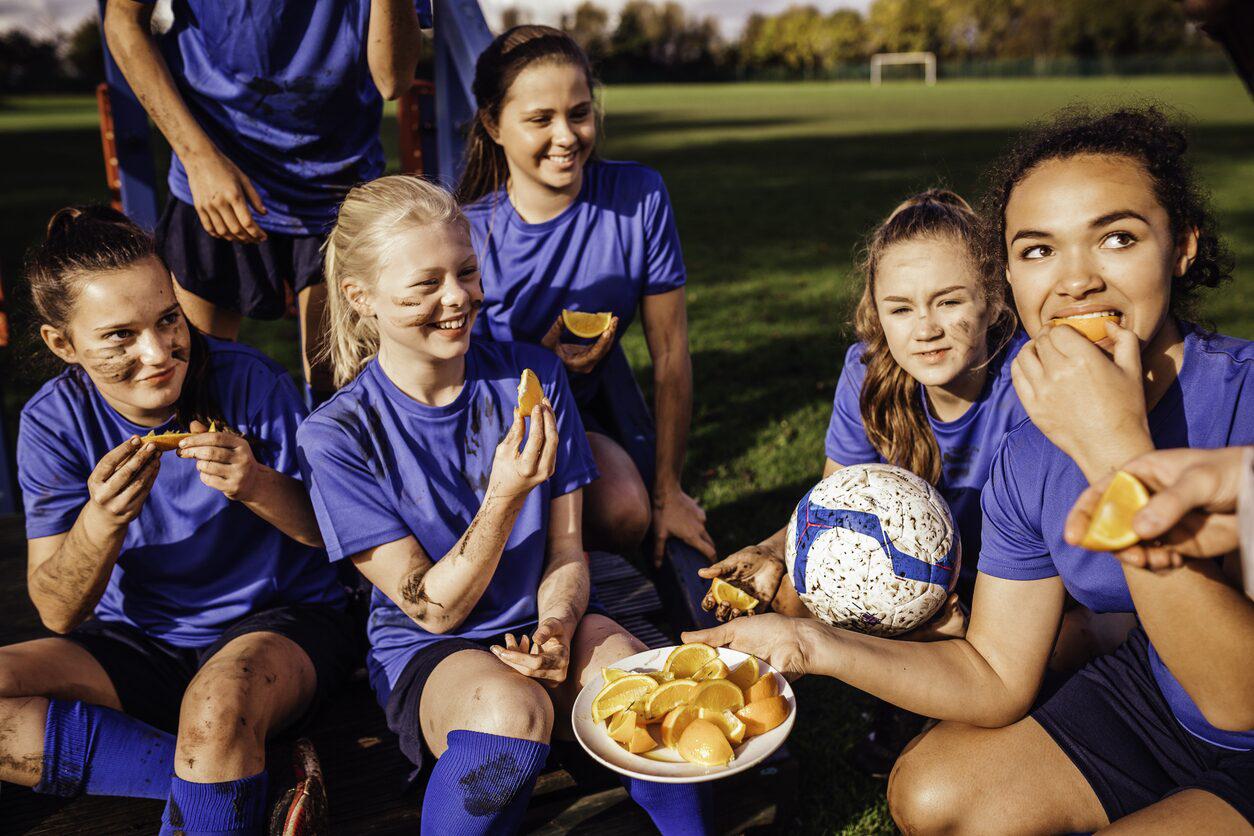
Meals should be eaten 3-4 hours before and snacks should be eaten 1-2 hours before activity. This allows the meal to be digested and avoids stomach upset, along with filling the fuel tank to provide the needed energy.
- Meal example: baked chicken strips, rice, broccoli, milk, blueberries, whole grain roll
- Snack example: half of peanut butter and jelly or deli meat sandwich, grapes, water, or milk
Eating During Exercise
Keep the focus of eating during exercise on carbohydrates, especially sources of glucose and electrolytes. If exercise lasts longer than an hour, it is necessary to consume an additional 30 to 60 grams of carbohydrates during the activity.
Examples: sports drink, energy bar, fruit chews, fresh fruit
Eating for Recovery
Recovery nutrition should be consumed within 30 minutes of exercise, especially if the next meal will be delayed or another activity quickly follows (within ~6-8 hours). Strive to consume 30-60 grams of fast-acting carbs (e.g., glucose, fructose) and 10-25 grams of quality protein (e.g., dairy, whey) to kickstart the reloading of muscle glycogen (fuel) and the rebuilding of muscle. Return to a normal meal pattern within the next 2-3 hours post activity to include a mixed meal of carbohydrates, protein, and fat.
During hot weather and/or long duration exercise (2+ hours), strive to add electrolytes to the meal, primarily sodium and potassium type foods/drinks.
Examples: low fat chocolate milk, banana, 100% orange juice, smoothie, Greek yogurt
Hydration
Fluids help to regulate body temperature and replace sweat losses during exercise. Water is a sufficient fluid for hydration in activities lasting < 1 hour. For exercise lasting > 1 hour and/or in a hot and humid environment, it is recommended to consume a sports drink containing 10-19 grams of sugar and 100-200 mg sodium per 8 oz. Dehydration (1-3% body weight loss) can decrease performance, increase fatigue, and can place athletes at risk for heat illness.
How much fluid do you need each day?
Daily Needs: Total body weight in pounds ÷ 2 = the total of fluids ounces you need per day
Add exercise needs:
- 2 hours before: 16 ounces
- During: 10-26 ounces/hour*
- After: 16-24 ounces for every pound lost
*Conduct a sweat rate (measure body weight before and after exercise, add fluids consumed) to determine fluid loss during exercise to personalize fluid intake.
Always carry a personal water bottle to your activity and check urine color during the day. Goal: light yellow/lemonade color. NOT clear like water! NOT dark like tea!
Female Athlete Triad
Young girls are busy and active, and sometimes do not meet their fuel needs as an athlete. This energy imbalance can cause a delay or stop their menstrual cycle. If 3 cycles are missed in a row or they come and go (< 6x per year), consult with a sports medicine physician. Lack of a menstrual cycle can cause estrogen levels to drop, increasing risk of stress fractures and effecting long-term bone health. Being an athlete is not a cause of missed menstrual cycles, it is lack of fuel.
Supplements/Energy Drinks
Supplements and energy drinks are not regulated and pose a health risk for young athletes. Typically, they are not needed and improperly used. Please consult a physician or sports dietitian to determine if warranted.
Reviewed November 2025 by: Rachel Frank, MD
Contributing expert: Rikki Keen, MS, RD, CSSD, CSCS
STOP Sports Injury tip sheets are brought to you by the American Orthopaedic Society for Sports Medicine. They provide general information only and are not a substitute for your own good judgment or consultation with a physician.
For more tip sheets and to find an expert near you, visit sportsmed.org/STOP
Copyright ©2025. American Orthopaedic Society for Sports Medicine. All rights reserved.
Resources
Hoch AZ, et al. Nutritional requirements of the child and teenage athlete. Phys Med Rehabil Clin N Am. 2008;19(2):373–98.
American College of Sports Medicine position stand. Nutrition and athletic performance. Med Sci Sports Exerc. 2009 Mar;41(3):709-31