
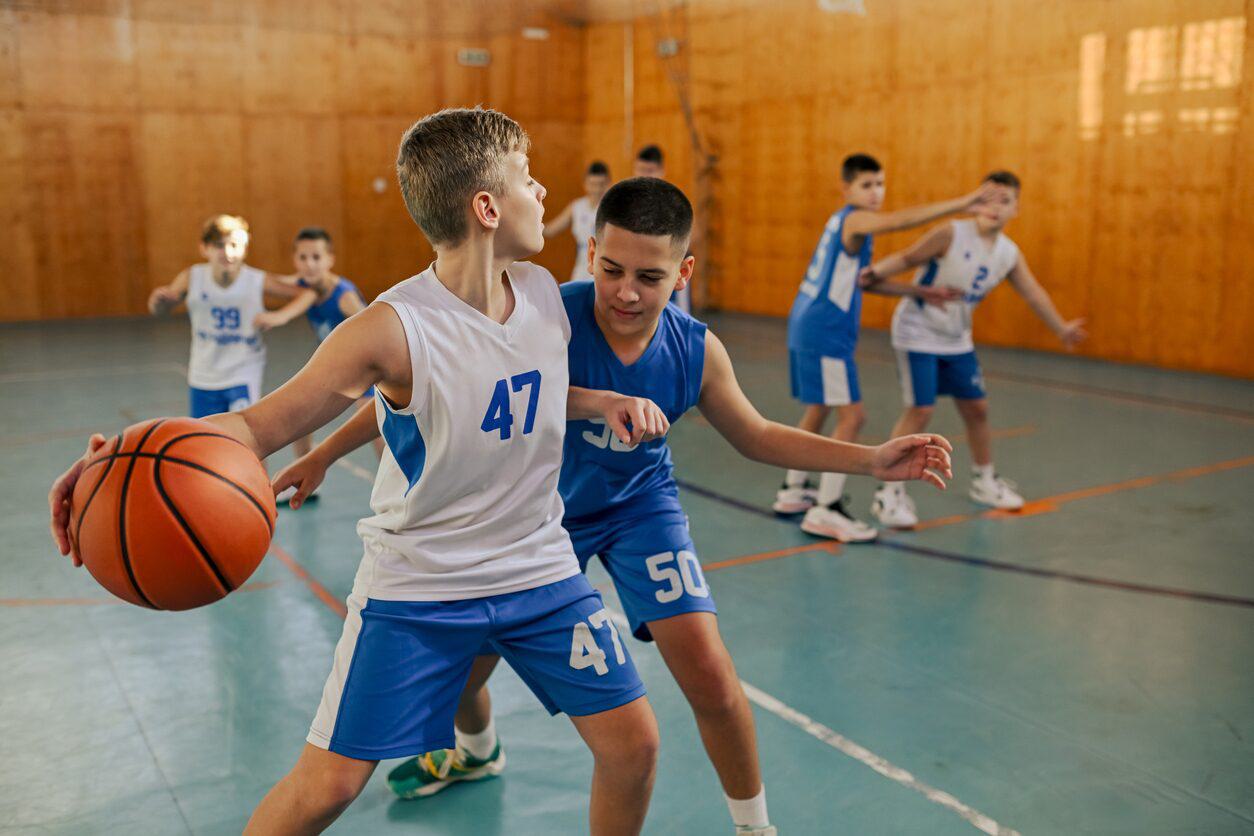
Youth sports are increasing in popularity in the United States and abroad, with rising numbers of young athletes, teams, leagues, and other programs throughout the country. There is also increasing intensity in many of these sports and a competitive culture that has led to sports specialization at younger and younger ages.
Coaches, league administrators, and parents have created or indirectly supported a structure and atmosphere in which children can and do play a given sport on a year-round basis, sometimes on multiple teams or in multiple leagues. Many parents and educators wonder about how to find that balance of having children pursue a smaller number of sports or a single sport—in part to allow them to develop enough to keep playing at an increasingly competitive level as they get older—versus having them play many sports throughout the year. Naturally, the important question arises, “Is sports specialization safe for children?”
What is sports specialization
Sports specialization has recently been defined as, “year-round intensive training in a single sport at the exclusion of other sports.”1 Research on the risks of sports specialization is increasing, and virtually all of the studies to date have suggested that sports specialization does, indeed, lead to higher injury rates,
particularly overuse injuries. One study that investigated over 300 high school athletes from two different high schools; one ‘small’ in terms of numbers of students, and one ‘large’ demonstrated that the small school students were less likely to pursue sports specialization than the large school students. In both groups, however, the highly specialized athletes were more likely to report both acute injuries and overuse injuries, both in the hip and knee.2 Another study showed a very clear link between the development of an overuse injury and three different risk factors: (1) a ‘high’ level of sports specialization, (2) playing their sport for more than 8 months of the year, and (3) playing their sport for more hours per week than their age.3 A review paper exploring pediatric overuse injuries describes how specialization may lead to overuse injuries throughout the body of growing child, including the shoulders, elbows, low back, hips, knees, and feet.4
Why is playing more than one sport important?
Parents may often respond to those recommending diversification of sports participation over specialization by insisting that their children will ‘fall behind’ in their sport if they don’t play year round. Interestingly, not only does research suggest that they are less likely to get injured by taking breaks from their sport—and thus be able to stay ‘in the game’ without long stretches of unexpected missed time— but one study suggested that most players in Division 1 athletics did not pursue early specialization.5 Other studies have shown that youth baseball pitchers actually have more success if they come from cold climates and throw for fewer months out of the year compared with pitchers from warmer climates, where they are likely throwing year-round.6,7,8 Although it seems obvious that practice and training are important for success in sports, many studies have shown that intensive training in sports does not help improve performance as much as many of us think. In many cases, the intensity of sports training is based more on tradition and culture than on scientific evidence that it is beneficial. There is evidence that early specialization in sports may actually decrease the likelihood that an athlete will make it to an elite level.9
So while exploring and excelling in one or a small number of sports is a common goal amongst young athletes and their families in today’s world, there are some real health risks, and perhaps even some risks to optimal performance, if children specialize their athletic participation too early. Playing multiple sports and taking breaks from sports has tremendous benefits for the growing body, and should be encouraged by coaches, parents, and healthcare providers alike.
Reviewed August 2025 by James Lee Pace, MD
Sports Tips are brought to you by the American Orthopaedic Society for Sports Medicine. They provide general information only and are not a substitute for your own good judgment or consultation with a physician.
For more tip sheets and to find an expert near you, visit sportsmed.org/STOP
Copyright ©2025. American Orthopaedic Society for Sports Medicine. All rights reserved.
References
- Jayanthi NA, LaBella CR, Fischer D, Pasulka J, Dugas LR. Sports specialized intensive training and the risk of injury in young athletes: a clinical case-control study. Am J Sports Med. 2015.43(4):794-801.
- Bell DR, Post EG, Trigsted SM, Hetzel S, McGuine TA, Brooks MA. Prevalence of sport specialization in high school athletics: A 1-year observational study. Am J Sports Med. 2016 Jun;44(6):1469-74. doi: 10.1177/0363546516629943. Epub 2016. Feb 26.
- Post EG, Trigsted SM, Riekena JW, Hetzel S, McGuine TA, Brooks MA,
Bell DR. The Association of Sport Specialization
and Training Volume with injury history in youth athletes. Am J Sports Med. 2017. Mar 1:363546517690848. doi: 10.1177/0363546517690848. [Epub ahead of print] - Wu M, Fallon R, Heyworth BE. Overuse injuries in the pediatric population. Sports Med Arthrosc. 2016. Dec;24(4):150-158.
- Post EG, Thein-Nissenbaum JM, Stiffler MR, Brooks MA, Bell DR, Sanfilippo JL, Trigsted SM, Heiderscheit BC, McGuine TA. High school sport specialization patterns of current Division I athletes. Sports Health. 2017. Mar/Apr;9(2):148-153. doi: 10.1177/1941738116675455. Epub
2016 Nov 3. - Kaplan KM, ElAttrache NS, Jobe FW, Morrey BF, Kaufman KR, Hurd WJ. Comparison of shoulder range of motion, strength, and playing time in uninjured high school baseball players who reside in warm and cold- weather climates. Am J Sports Med. 2011.39:320-328.
- Major League Baseball. http://www.mlb.com/mlb/players... mlb_players.
- Fleisig GS, Andrews JR. Prevention of elbow injuries in youth baseball pitchers. Sports Health. 2012.4(5):419-424.
- Macnamara BN, Moreau D, Hambrick DZ. The relationship between deliberate practice and performance in sports: A meta-analysis. Perspectives on Psychological Science. 2016.11(3). 333-350.