
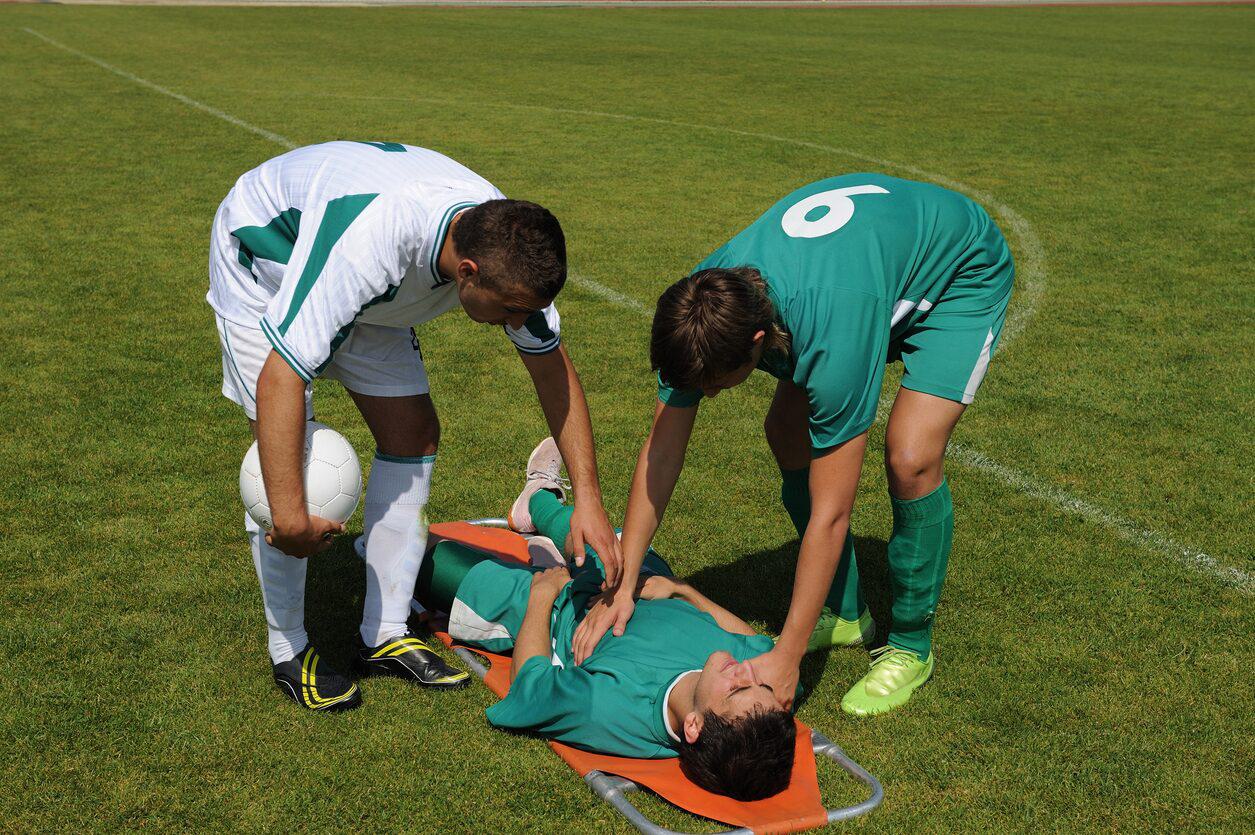
Sudden cardiac death (SCD) in athletes, although extremely rare, is a potentially catastrophic complication of sports. The most common cause of cardiac death related to sports is hypertrophic cardiomyopathy, an abnormal enlargement of cardiac muscle. This is a rare genetic condition of the heart that predisposes an individual to SCD with physical exertion.
Another rare cause of sudden cardiac death is commotio cordis, where direct trauma to the chest at a specific moment in the cardiac cycle initiates a dangerous arrhythmia (abnormal rhythm) in the heart’s electrical system. Commotio cordis usually occurs in sports where a blunt projectile, such as a baseball or hockey puck, hits the athlete’s chest.
How are sudden cardiac events treated?
Life-threatening cardiac arrhythmias that occur in young athletes are very difficult to treat. Immediate use of an AED (automated external defibrillator) may provide some benefit. Immediate CRP and defibrillation is extremely important to start as soon as possible.
How can SCD be prevented?
Unfortunately, the only way to prevent death from hypertrophic cardiomyopathy is recognition of the condition and counseling the athlete to avoid strenuous activity. This condition can be diagnosed by cardiac ultrasound. Some experts have advocated screening athletes with ultrasound or electrocardiograms (EKGs), although this screening is controversial due to the high costs and relative rarity of the condition. However, any athlete with cardiac symptoms, such as dizziness, fatigue, shortness of breath out of proportion to the physical activity, palpitations, seizures, and especially syncope (passing out) should be taken out of competition and thoroughly tested. Further, a family history of cardiac abnormalities, especially a known relative with hypertrophic cardiomyopathy or a history of unexplained sudden death in a family member, warrants a complete cardiac evaluation.
Various forms of chest protection and pads have been tried in order to prevent commotio cordis, but unfortunately no method has been shown to prevent this tragic event. Rule changes in some sports may be of some benefit to prevent commotio cordis. For example, limiting the use of aluminum bats in baseball and softball may protect the pitcher by decreasing the speed that the ball comes off the bat. Softer balls and teaching players to turn their chests away from a batted ball may also reduce the risk of commotio cordis.
Reviewed June 2026 by Henry Bone Ellis, Jr., MD and Shane Miller, MD
Expert Consultant: Kenneth Fine, MD
Sports Tips are brought to you by the American Orthopaedic Society for Sports Medicine. They provide general information only and are not a substitute for your own good judgment or consultation with a physician.
For more tip sheets and to find an expert near you, visit sportsmed.org/STOP
Copyright ©2025. American Orthopaedic Society for Sports Medicine. All rights reserved.