
With the start of the baseball season each spring, doctors frequently see an increase in elbow problems in young baseball players. A common elbow problem in these children is medial apophysitis, commonly referred to as “Little Leaguer elbow” or “Youth Pitching elbow.”
The elbow joint is made up of three bones: upper arm bone (humerus) and the two bones in the forearm (radius and ulna). Muscles, ligaments, and tendons hold the elbow joint together.
“Pitcher’s elbow” occurs when repetitive throwing creates an excessively strong pull on the tendons and ligaments of the elbow. The young player feels pain at the prominence on the inside of the elbow. It can be serious if it becomes aggravated. Repeated pulling can tear ligaments and tendons away from the bone. The tearing may pull tiny bone fragments with it in the same way a plant takes soil with it when it is uprooted. This can disrupt normal bone growth, resulting in deformity.
What are the symptoms?
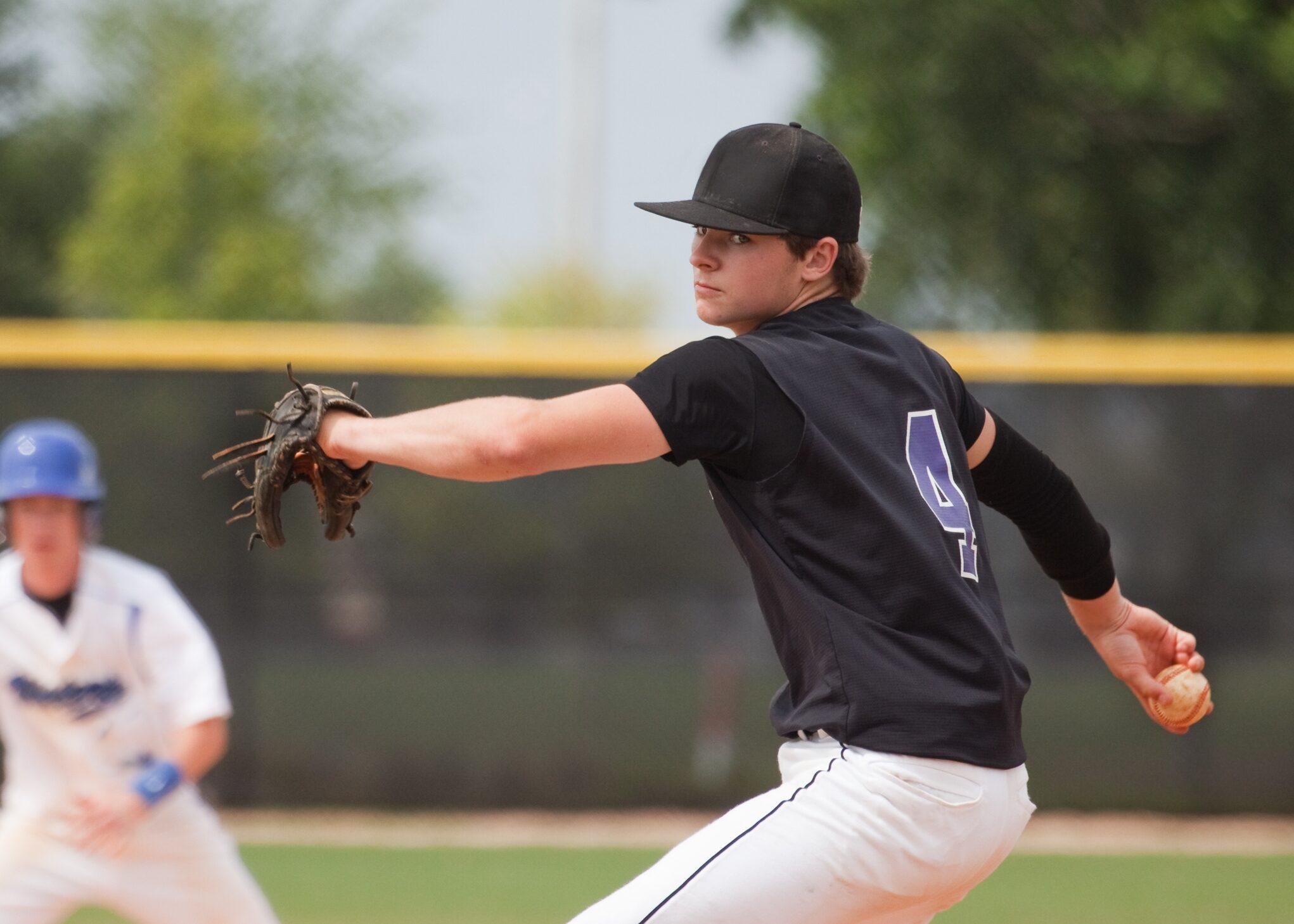
“Pitcher’s elbow” may cause pain on the inside of the elbow. A child should stop throwing if any of the following symptoms appear:
- Elbow pain
- Restricted range of motion
- Locking or catching in the elbow joint
How is the condition treated?
Left untreated, throwing injuries in the elbow can become complicated conditions.
Nonsurgical Treatment
Younger children tend to respond better to nonsurgical treatments:
- Rest. Continuing to throw may lead to major complications and jeopardize a child’s ability to remain active in a sport that requires throwing.
- Icing. Apply ice packs to bring down any swelling.
- Training. Refine throwing technique.
If pain persists after a few days of complete rest of the affected area, or if pain recurs when throwing is resumed, stop the activity again until the child gets treatment.
What is the recovery time?
Recovery depends on the athlete’s age and severity of injury. If identified early and activity modification is started, it could be only a short duration until the athlete is back to sport. On the other hand, if the athlete continues to play despite pain and other symptoms, the damage could take months to resolve or could be permanent.
How can the injury be prevented?
The general guideline for how many pitches a child can safely throw each week is 75 for 8- to 10-year-olds; 100 for 11- to 12-year-olds; and 125 for 13- to 14-year-olds. This includes both practice and competitive play. To prevent throwing injuries, young pitchers should only play three to four innings each game.
If they play other positions during the same game, then they should not be rotated to the catcher position; instead, they should play first or second base, or an outfield position to minimize the number of throws per game.
Reviewed November 2025 by Rachel Frank, MD
Contributing expert: Robert Gallo, MD
Sports Tips are brought to you by the American Orthopaedic Society for Sports Medicine. They provide general information only and are not a substitute for your own good judgment or consultation with a physician.
For more tip sheets and to find an expert near you, visit sportsmed.org/STOP
Copyright ©2025. American Orthopaedic Society for Sports Medicine. All rights reserved.